
Can you rent a motorbike in Vietnam as a tourist? Yes, renting is easy, but riding legally is not. To rent a motorbike in Vietnam and stay within the law, you need a Vietnamese licence or a 1968-convention International Driving Permit with the motorcycle class, carried with your home licence. Scooters cost roughly 150,000–250,000 VND a day in Ho Chi Minh City, and riding without a valid licence can cost 2–8 million VND in fines.
Key facts (as of November 2026)
- Vietnam’s Road Traffic Order and Safety Law (Law 36/2024/QH15) took effect on January 1, 2025, and sets class A1 for motorcycles up to 125 cc (or electric up to 11 kW) and class A for anything larger.
- Vietnam accepts International Driving Permits issued under the 1968 Vienna Convention only; 1949-convention permits, such as those issued in the United States, are not valid there.
- An IDP must show the motorcycle category and must be carried together with the original home licence.
- Under Decree 168/2024/ND-CP, riding a bike up to 125 cc without a licence is fined 2–4 million VND; above 125 cc the fine rises to 6–8 million VND.
- Not wearing a helmet costs 400,000–600,000 VND, and Vietnam has a zero-alcohol rule for every rider.
- Typical rental rates in Ho Chi Minh City sit around 150,000–250,000 VND per day for an automatic scooter and 1.5–3 million VND per month, plus a deposit.
- Many travel insurance policies refuse claims when the rider was not licensed for the vehicle, so check your wording before you ride.
Written by the Vung Tau Pearl team. Last updated November 17, 2026. Laws, fines and prices change; check the official sources listed at the end before you ride.
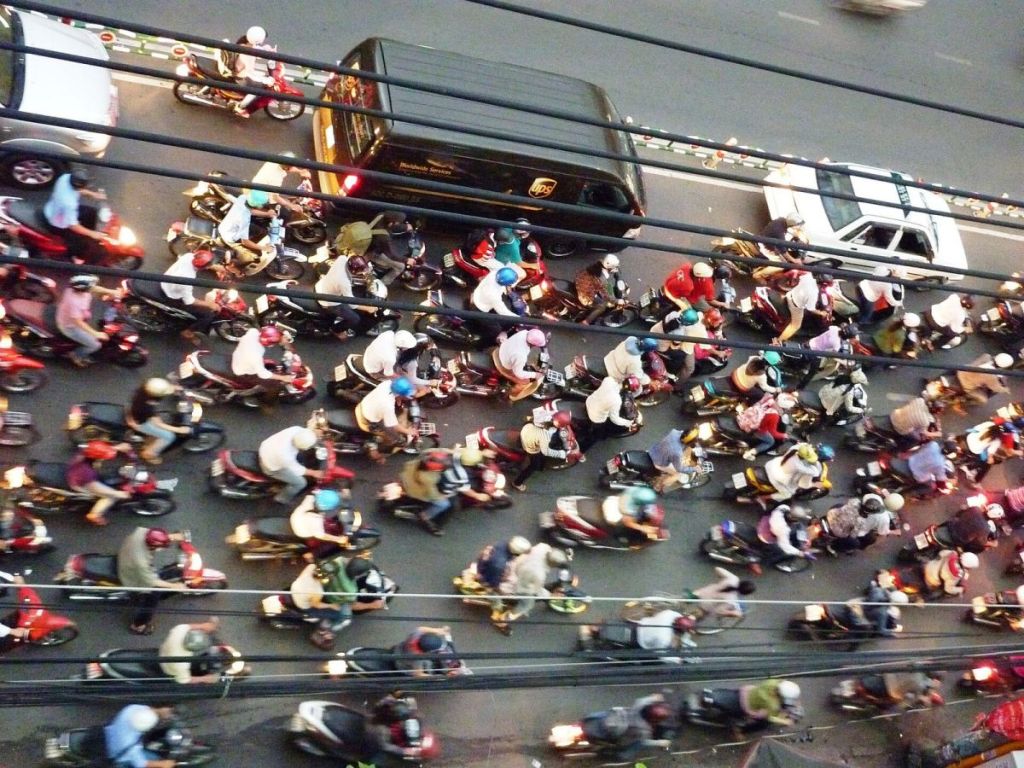
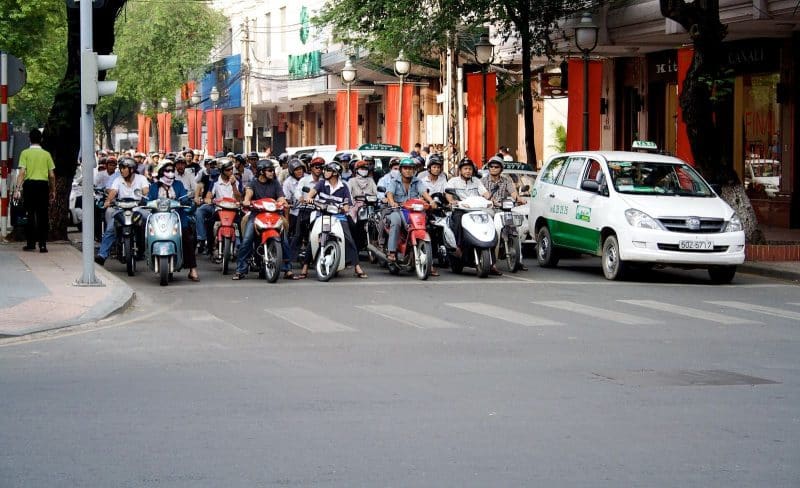
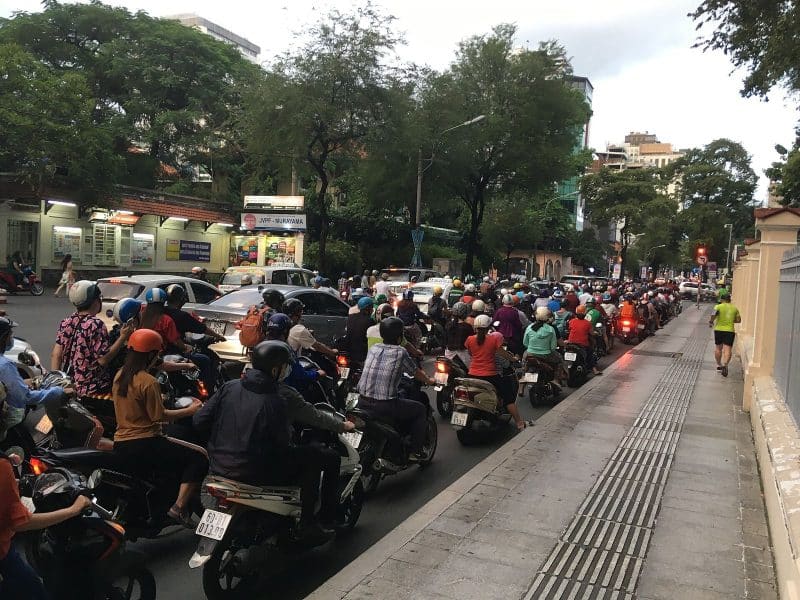
Photos: Ho Chi Minh Tours image library.
Is it legal for tourists to rent a motorbike in Vietnam?
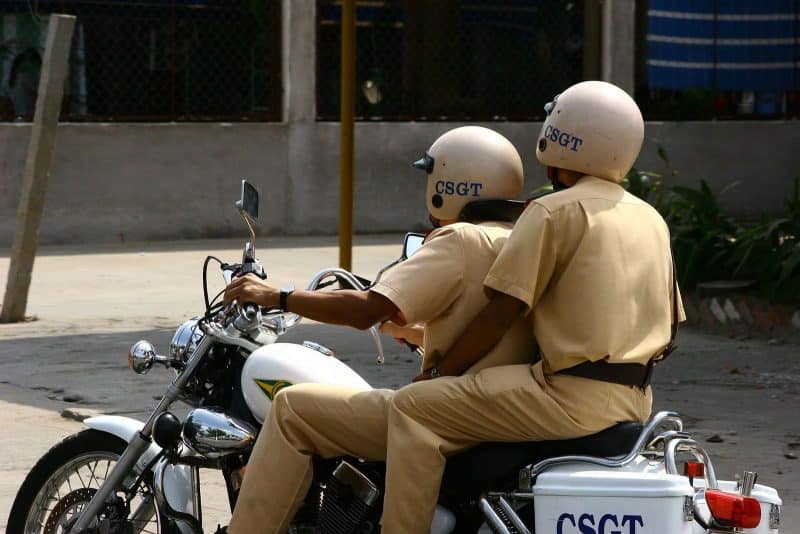
Renting is legal; riding without the right licence is not. No law stops a shop from handing you the keys, and most rental shops in Saigon, Hanoi, Da Nang, Hoi An or Vung Tau will ask only for a deposit and a copy of your passport. The legal duty sits with the rider. Once you start the engine on a public road, you must hold a licence that covers the class of bike you are riding, carry it with you, wear an approved helmet and keep your blood-alcohol level at zero.
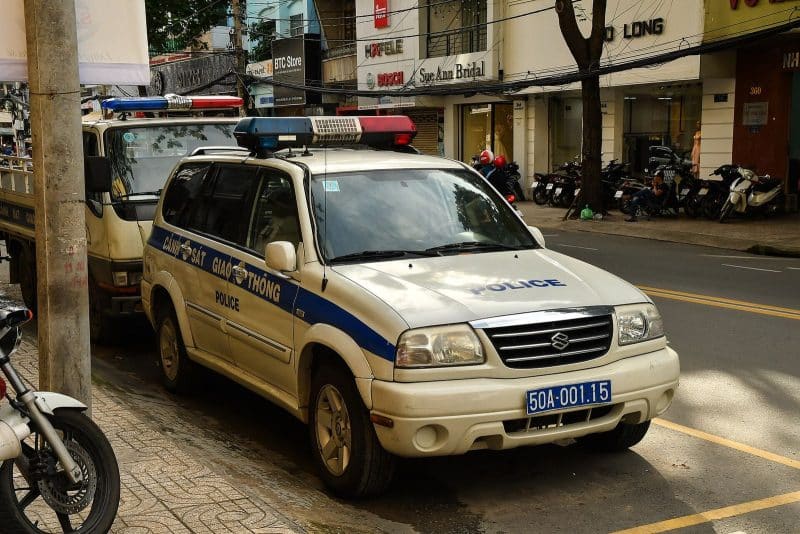
This gap between easy renting and strict riding rules is why so many visitors get caught out. A shop owner saying “no licence needed” is describing their own rental policy, not the traffic law. If you are stopped at a checkpoint, the officer will ask for your licence, the bike’s registration card (usually kept under the seat or in the storage box) and your passport or a copy. Without a valid licence the rider pays the fine, and the bike can be held for several days, which the rental shop will usually charge back to you.
The question matters even more because of insurance. Most travel insurance policies exclude accidents that happen while the policyholder is breaking local law, and riding without a licence counts. That means a crash that needs a hospital stay or medical evacuation may not be covered at all. For a short city break, that risk is hard to justify when cheaper and safer options exist, which we cover further down.
Which licence do you need to ride a motorbike in Vietnam?
You need either a Vietnamese motorcycle licence or a valid International Driving Permit (IDP) issued under the 1968 Vienna Convention, with the motorcycle category stamped. The class must match the bike. Under Law 36/2024/QH15, which replaced the old 2008 traffic law from January 1, 2025, the two classes that matter for travelers are:
- Class A1: motorcycles up to 125 cc, or electric motorcycles with motors up to 11 kW. This covers almost every scooter a rental shop will offer, such as the Honda Vision, Honda Lead, Yamaha Janus, Honda Wave or Honda Future.
- Class A: motorcycles above 125 cc or electric motorcycles above 11 kW. This covers the Honda Air Blade 160, Yamaha NVX 155, Honda XR150, Honda Winner and larger touring bikes.
Small mopeds under 50 cc, and low-powered electric mopeds, sit in a separate category that does not need a licence class, but riders must still be at least 16 and wear a helmet. Few tourist rental shops offer them because they are slow on main roads and struggle on hills.
| What you hold | Can you ride legally in Vietnam? | Notes |
|---|---|---|
| Vietnamese class A1 licence | Yes, up to 125 cc / 11 kW | Best option for long-stay visitors and residents |
| Vietnamese class A licence | Yes, any motorcycle | Needed for bikes above 125 cc |
| 1968-convention IDP with motorcycle category + home motorcycle licence | Yes, within the category shown | Carry both originals; a photocopy is not enough |
| 1968-convention IDP for cars only | No | A car category does not cover motorcycles |
| 1949-convention IDP (for example, issued in the US) | No | Vietnam joined the 1968 convention in 2015 and recognizes only that format |
| Home licence only, no IDP | No, except for nationals of countries with a bilateral agreement | Check with your embassy before you travel |
| No licence | No | Fines of 2–8 million VND, plus possible impoundment |
Local tip: Look at the back page of your IDP before you fly. If the motorcycle box (category A) is not stamped, the permit does not cover a scooter in Vietnam, even if your home licence does. Fixing that from abroad is almost impossible, so check while you are still at home.
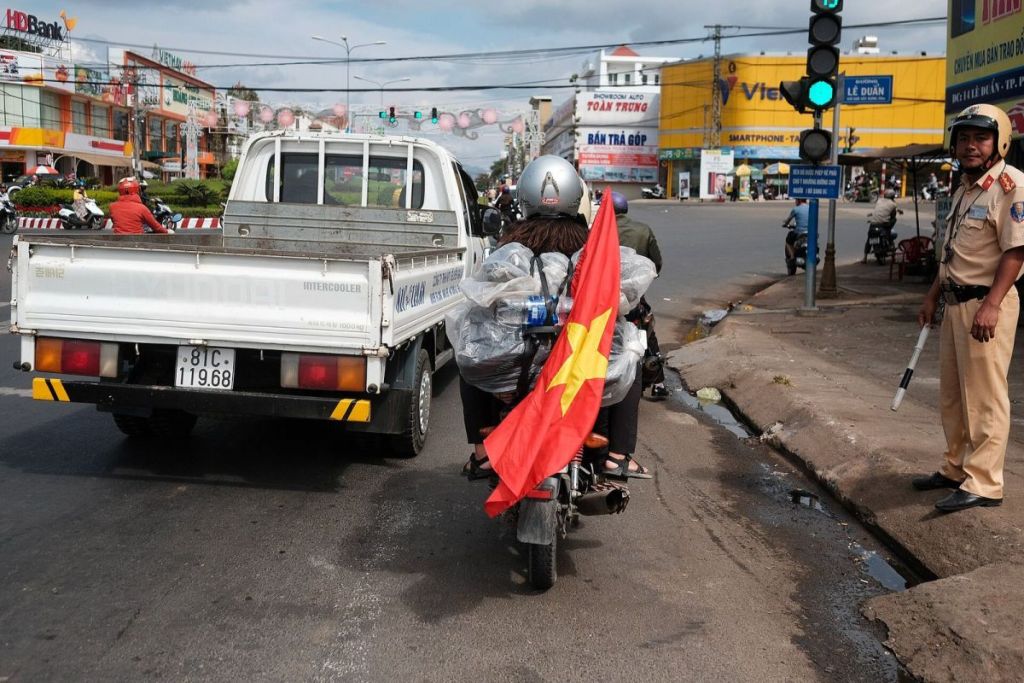
Photos: Ho Chi Minh Tours image library.
Does an International Driving Permit work in Vietnam?
An IDP works only if it was issued under the 1968 Vienna Convention on Road Traffic and lists the motorcycle class. Vietnam became a party to the 1968 convention in 2015 and recognizes permits from other countries that signed it. The older 1949 Geneva Convention permit, which is still the only format issued in the United States, is not accepted. Several other countries also issue the 1949 format, so check which convention is printed on the cover of your permit rather than assuming.
The IDP is a translation of your home licence, not a licence on its own. That is why the traffic police will want to see both documents together, and why an IDP from a country where you hold only a car licence will not let you ride a motorbike. You also need to get it in your home country before you leave; tourists cannot pick one up after landing in Vietnam.
Vietnam also issues its own IDPs, but only to people who already hold a Vietnamese licence, for use when they drive abroad. Under Circular 12/2025/TT-BCA, an IDP cannot replace a Vietnamese licence for a resident driving inside Vietnam, so if you are moving here for work or study, plan to convert your licence instead.
How do foreigners get a Vietnamese motorcycle licence?
Foreign residents can either convert a valid home motorcycle licence or take the Vietnamese A1 or A test. Conversion is the simpler route. You generally need a temporary or permanent residence card valid for at least three months, your original foreign licence with a notarized Vietnamese translation, your passport and visa, and passport photos. Since March 1, 2025, licence administration has been handled by the traffic police under the Ministry of Public Security rather than the old Department of Transport, so applications go through the police licence offices or the national public services portal.
If your home licence does not include a motorcycle class, conversion will only give you the classes you already hold. In that case you would need to sit the Vietnamese test, which includes a theory exam on traffic law and a practical riding test on a closed course. Driving schools in Ho Chi Minh City and Hanoi run courses for foreigners, sometimes with English support, and they handle much of the paperwork.
For a two-week holiday, neither route is realistic. Conversion makes sense for expats, digital nomads on long stays and students; for short-stay visitors, the practical choice is between a valid 1968 IDP with the motorcycle category, or not riding yourself.
What are the fines for riding without a licence in Vietnam?
Fines rose sharply when Decree 168/2024/ND-CP took effect on January 1, 2025. Riding a motorbike up to 125 cc without a valid licence is fined 2–4 million VND, and riding a bike above 125 cc without the right licence is fined 6–8 million VND. Police can also hold the vehicle temporarily, and you will be liable to the rental shop for the days it sits in the impound yard.
| Offence (motorbike rider) | Fine under Decree 168/2024 (as of November 2026) |
|---|---|
| No valid licence, bike up to 125 cc / 11 kW | 2,000,000–4,000,000 VND |
| No valid licence, bike above 125 cc / 11 kW | 6,000,000–8,000,000 VND |
| Rider or passenger without a helmet, or helmet not fastened | 400,000–600,000 VND |
| Any alcohol in breath or blood | From 2,000,000 VND, rising to 8,000,000–10,000,000 VND at the highest level, plus licence suspension |
| Leaving the scene of an accident | 8,000,000–10,000,000 VND |
The amounts above are in Vietnamese dong; 1,000,000 VND is roughly 38–40 US dollars at late-2026 exchange rates. Fines are paid at the State Treasury or through official online channels, and officers should give you a written record. Cities also now use camera-based fines, which are matched to the bike’s registration plate and passed on to the owner; rental shops will usually charge these to the customer who had the bike on that date, so keep your rental contract.
Useful Vietnamese: bằng lái xe (driving licence), giấy đăng ký xe or cà vẹt (registration card), mũ bảo hiểm (helmet), thuê xe máy (rent a motorbike), đặt cọc (deposit), xăng (petrol), tiệm sửa xe (motorbike repair shop).
How much does it cost to rent a motorbike in Vietnam?
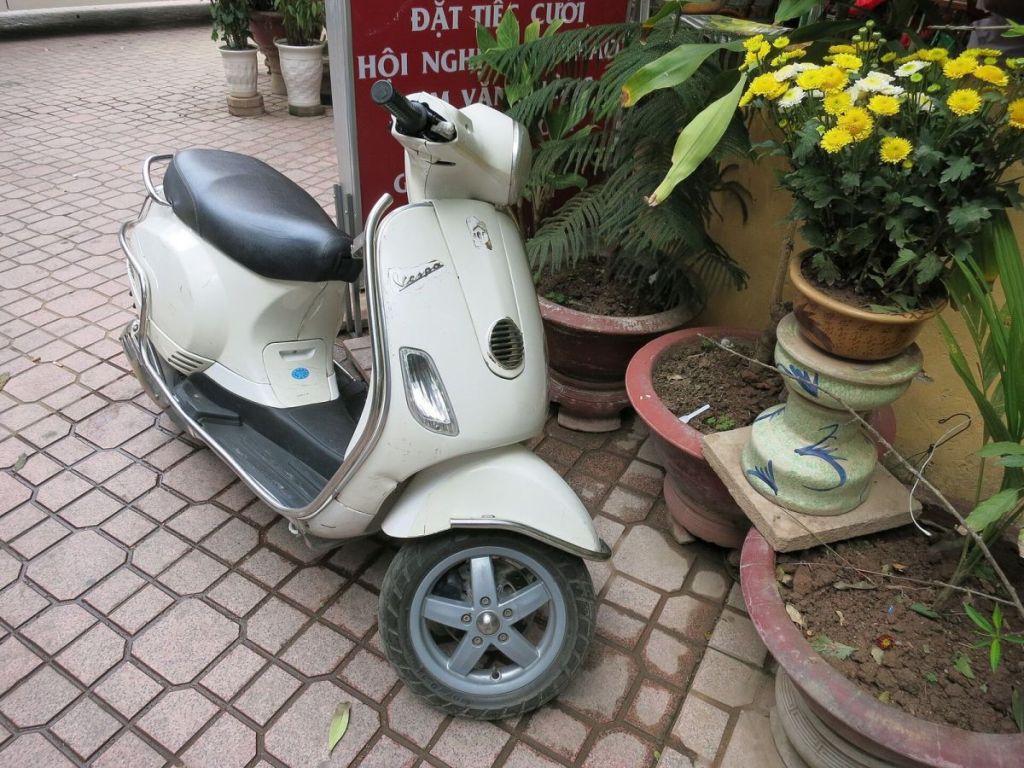
An automatic scooter typically costs 150,000–250,000 VND per day in Ho Chi Minh City, with lower rates for weekly and monthly hires, according to rental price surveys published in mid-2026. Prices are a little lower in Hanoi, Hoi An and Mui Ne, and higher on Phu Quoc and in peak season, when rates can rise by a third or more. Beach towns near Saigon, including Vung Tau, tend to sit in the same range as the city, with weekend demand pushing prices up.
| Bike type | Typical models | Licence class | Approx. daily rate (as of mid-2026) |
|---|---|---|---|
| Automatic scooter, 110–125 cc | Honda Vision, Honda Lead, Yamaha Janus | A1 | 150,000–250,000 VND |
| Semi-automatic, 110–125 cc | Honda Wave, Honda Future | A1 | 100,000–180,000 VND |
| Sport scooter, 125–160 cc | Honda Air Blade, Yamaha NVX | A1 or A (check cc) | 200,000–300,000 VND |
| Manual and adventure bikes, 150 cc and up | Honda XR150, Honda Winner, larger touring bikes | A | 250,000–800,000 VND |
| Monthly scooter hire | Usually 110–125 cc automatics | A1 | About 1.5–3 million VND per month |
Fuel is extra and cheap; a scooter tank holds 4–6 liters and lasts a few days of city riding. Most shops hand the bike over with only enough fuel to reach the nearest petrol station and ask you to return it the same way. Parking costs 5,000–10,000 VND at guarded lots outside markets, malls and attractions, and more at night or in central districts.
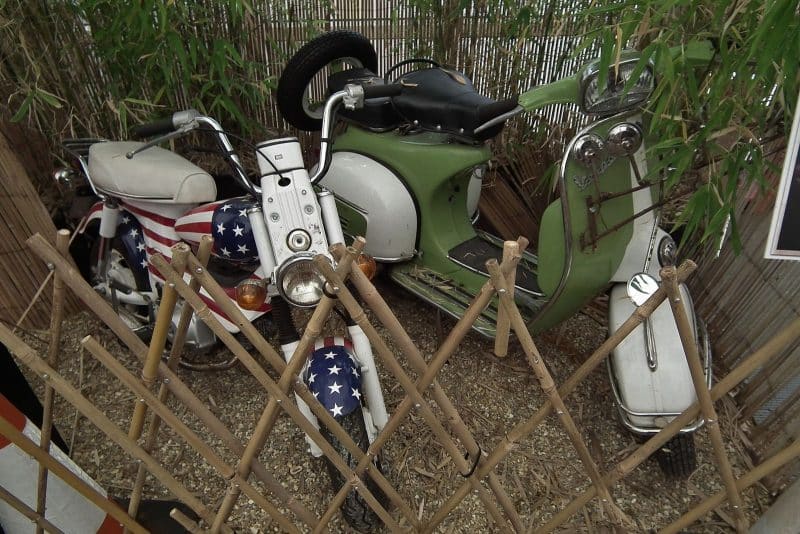
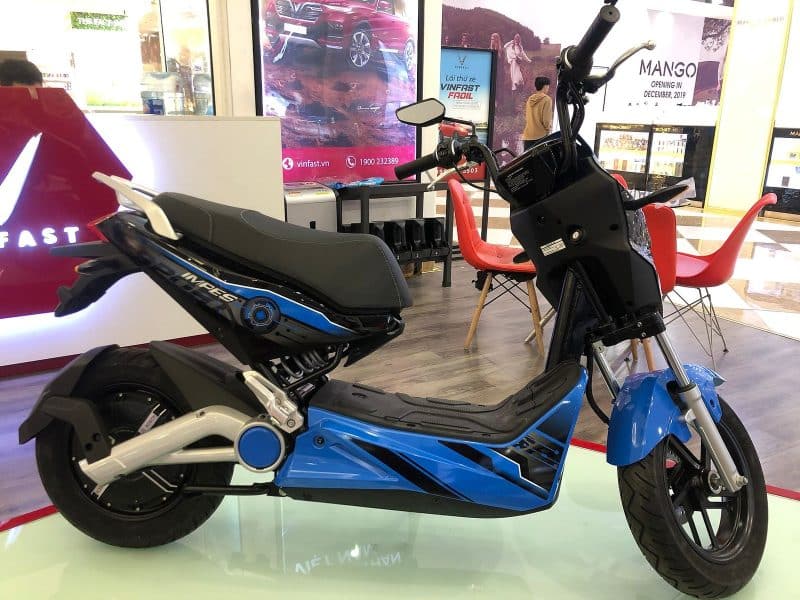
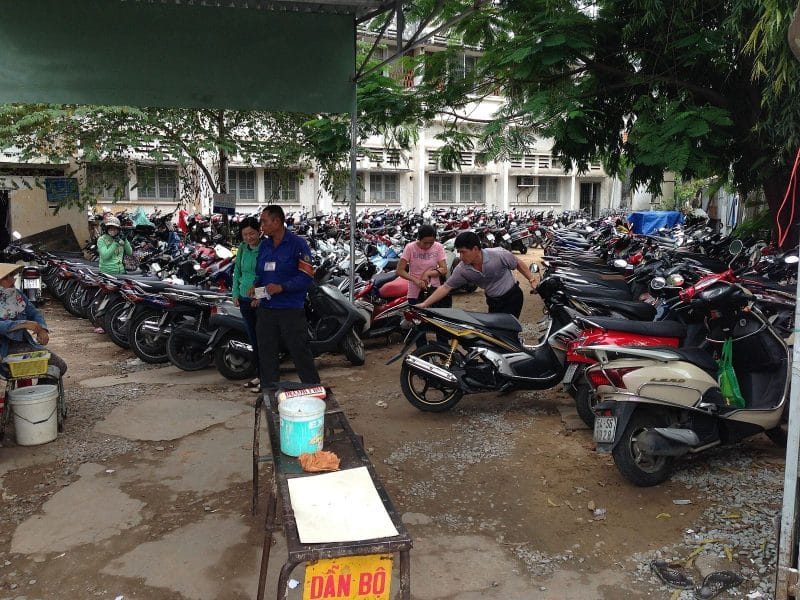
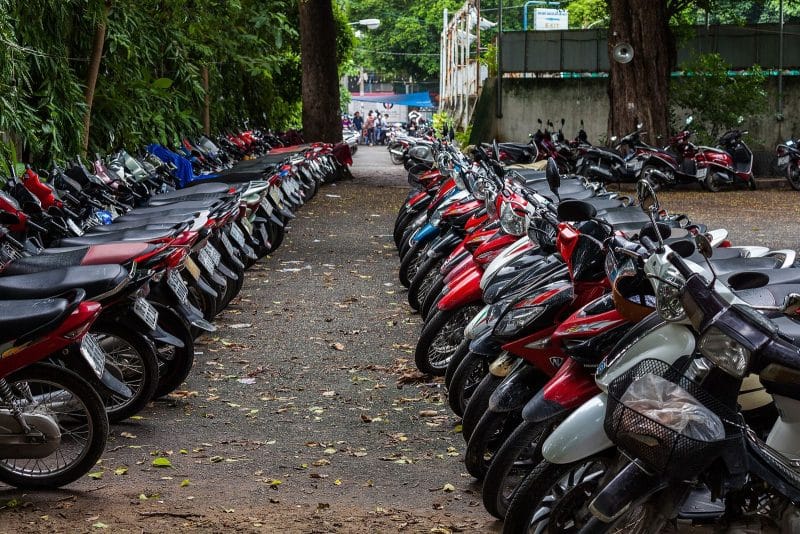
Photos: Ho Chi Minh Tours image library.
What do rental shops ask for as a deposit?
Most shops ask for a cash deposit, a passport, or both. Cash deposits usually range from 1 million to 10 million VND depending on the bike’s value; a Honda Vision might need 2–3 million VND. Some shops still ask to hold your original passport, but this is risky: hotels need it to register you with local police, you need it to change money, and it gives the shop all the leverage in any dispute. Offer a photocopy plus a higher cash deposit instead, and walk away if the shop refuses.
Before you ride off, take time-stamped photos and a short video of the bike from every side, including existing scratches, the mirrors, the tires and the fuel gauge. Ask for a written contract or at least a message from the shop confirming the daily rate, the return date, what happens if the bike is stolen and what you pay for damage. Get the registration card and check that the number plate on it matches the bike.
- Test the brakes, horn, lights and indicators before you leave the shop.
- Ask for a helmet that fits and has a working chin strap; many shops hand out thin “half-shell” helmets, so ask for a better one or bring your own.
- Ask whether the shop offers roadside help and save their phone number in your contacts.
- Agree in writing whether the bike can leave the city, since some shops forbid long trips or charge extra.
Which motorbike should a first-timer choose?
For most visitors, a 110–125 cc automatic scooter is the right choice. It needs no clutch or gear changes, it falls within class A1, it is light enough to push into a parking space, and spare parts are sold in every town. The Honda Vision and Honda Lead are the most common rental models; the Lead has a larger storage box that fits a backpack or two half-face helmets.
Semi-automatic bikes such as the Honda Wave are cheaper and handle bad roads better, but you need to change gears with your foot. They are popular with long-distance riders on routes such as the Ha Giang Loop. Manual bikes above 125 cc need a class A licence and real riding experience; they are a poor choice for a first ride in Vietnamese traffic.
Electric scooters, including VinFast models, are now common in cities. They are quiet and cheap to charge, but range drops with heavy loads and hills, and charging points are still uneven outside the big cities. If you rent one, confirm the real range and where you can charge before you set out.
How safe is riding a motorbike in Vietnam?
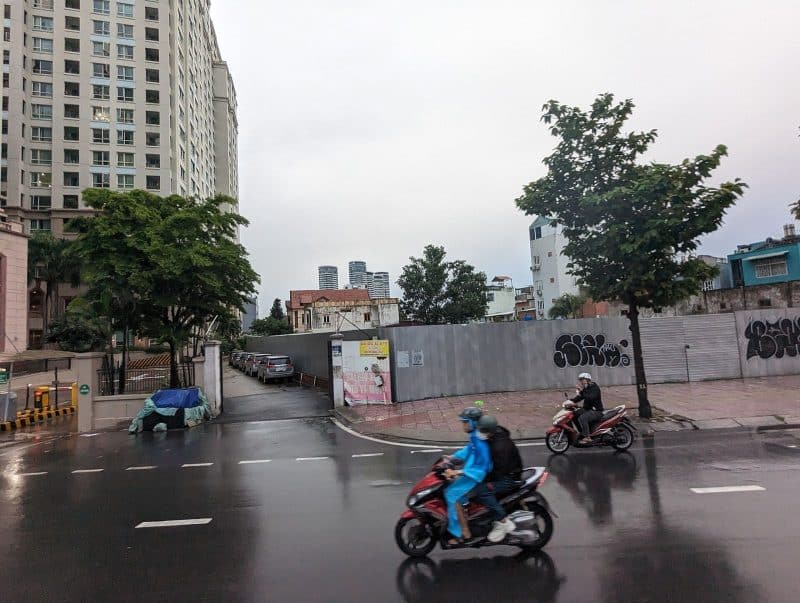
Riding is the most common way people get around Vietnam, but it is also the leading cause of serious injury for visitors. Vietnam’s roads carry tens of millions of motorbikes, traffic flows in ways that look chaotic to newcomers, and many accidents involving foreigners happen in the first days of riding. The risk falls sharply if you are licensed, sober, wear a proper helmet and stay out of the busiest city traffic until you are comfortable.
Traffic in Vietnam drives on the right. Bigger vehicles take priority in practice, horns are used to signal “I am here” rather than anger, and riders often move into any gap in the traffic. Expect motorbikes coming the wrong way in the inside lane, people pulling out of alleys without looking, and sudden stops near markets and schools. Ride predictably, keep a steady speed and avoid sudden swerves; other riders adjust around you as long as you do not surprise them.
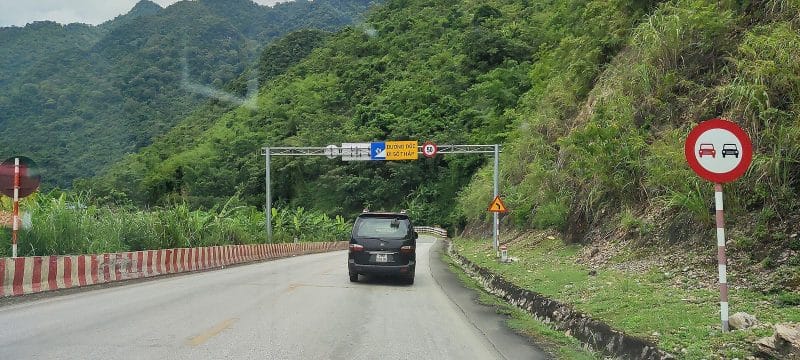
Speed limits for motorbikes, as set from January 1, 2025, are generally up to 60 km/h on divided roads and 50 km/h on undivided roads inside built-up areas, and up to 70 km/h outside them; mopeds are limited to 40 km/h. Motorbikes are banned from expressways. Many roads post lower limits, so follow the signs.

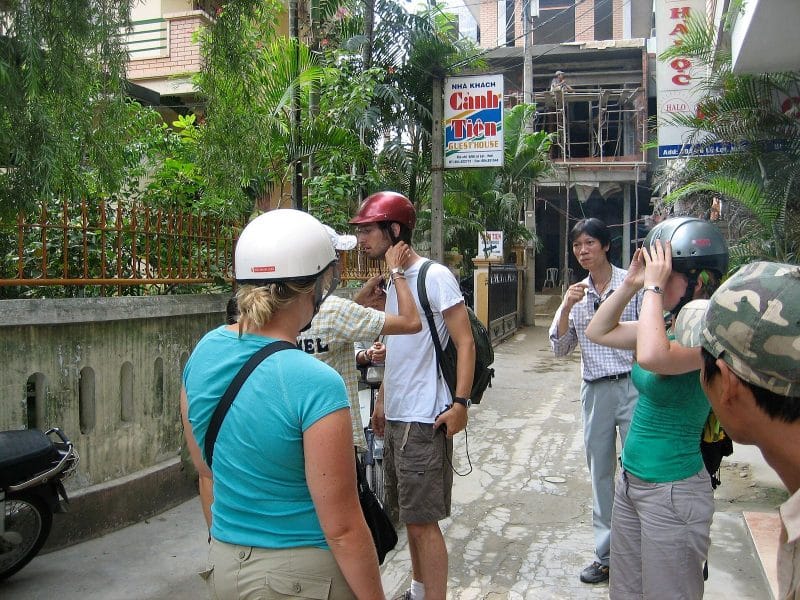
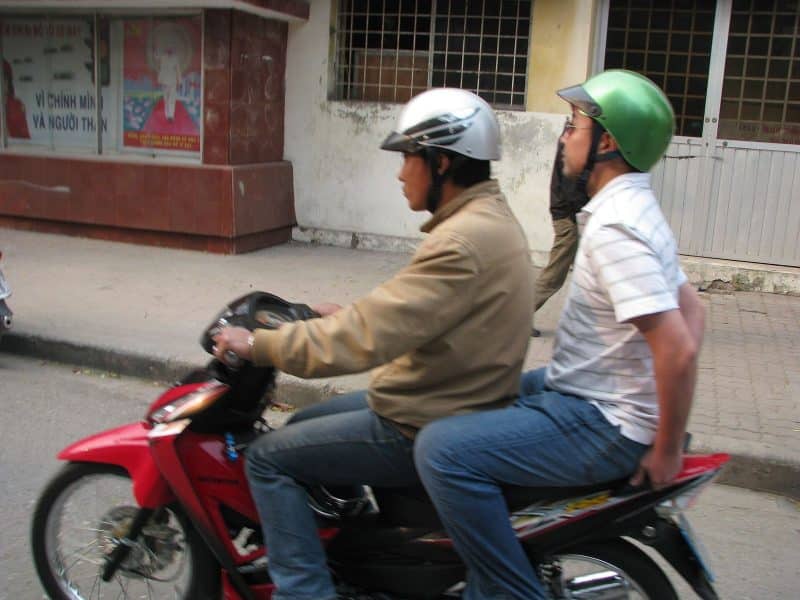
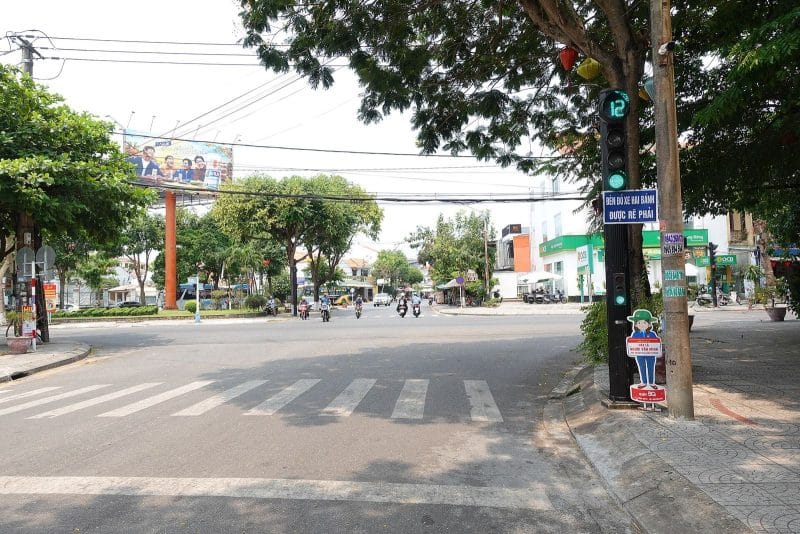
Photos: Ho Chi Minh Tours image library.
Local tip: Avoid riding in Ho Chi Minh City between 4:30 pm and 7 pm on weekdays, when roads such as Dien Bien Phu, Nguyen Thi Minh Khai and Vo Van Kiet fill with commuters. If you are still learning, practice early on a Sunday morning, when the streets are at their quietest.
What helmet should you wear?
Wear a helmet that meets Vietnamese standards (look for the CR or QCVN mark), fits snugly and has a fastened chin strap. Fines apply to both rider and passenger if a helmet is missing or not buckled. The thin shells sold for under 100,000 VND at roadside stalls offer little real protection; a solid three-quarter or full-face helmet from a proper shop costs from about 400,000–1,000,000 VND and is worth buying if you plan to ride for more than a day or two.
Wear closed shoes, long trousers and a light jacket, even in the heat. Sunburn and road burns are the two most common problems for riders in shorts and flip-flops. A cheap rain poncho stored under the seat is essential from May to November in the south, when afternoon storms arrive with little warning.
What are the safer alternatives to renting a motorbike?
If you do not hold the right licence, there are plenty of ways to experience Vietnam from the back of a bike without riding yourself. These options are legal, insured through the operator and usually cheaper than paying a fine.
Ride-hailing motorbike taxis. Grab, Be and Xanh SM all offer motorbike rides in major cities, with the price shown in the app before you book and a helmet provided by the driver. Short trips across central Ho Chi Minh City often cost less than a coffee. If you are landing in Saigon, the same apps work for the first leg into the city; read this walkthrough on booking a Grab from Tan Son Nhat Airport before you arrive.
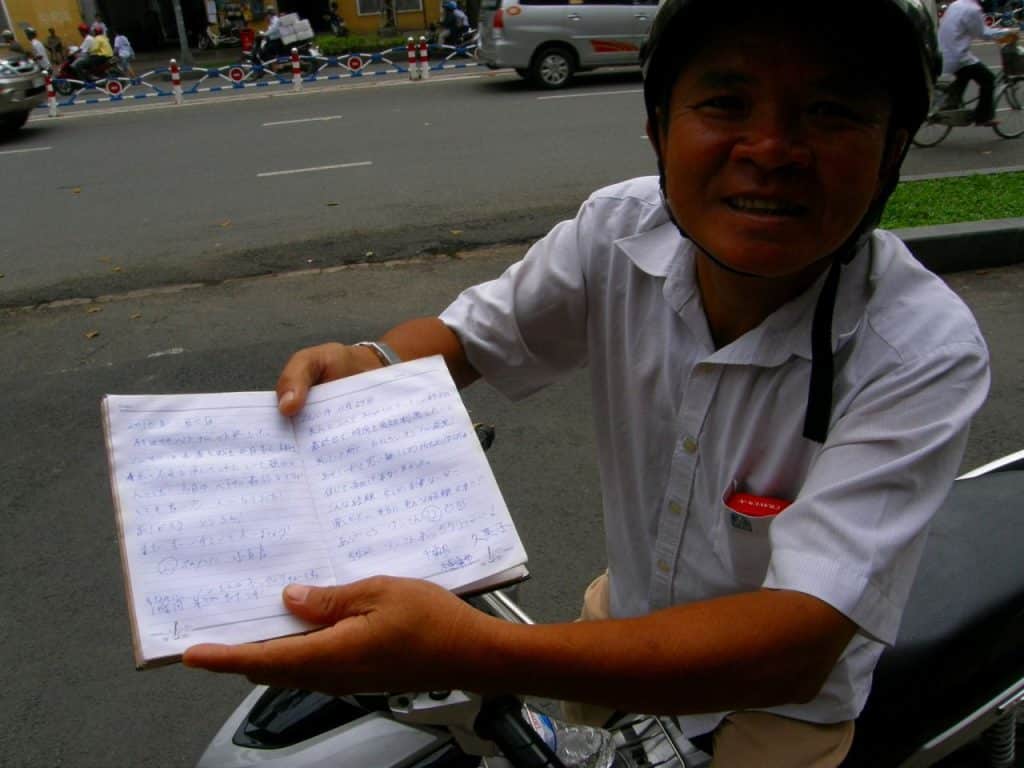
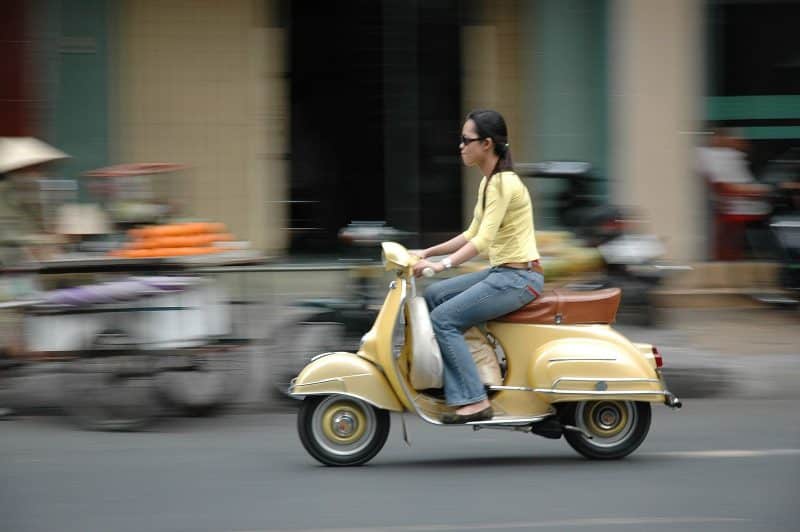
Guided motorbike and Vespa tours. Experienced local riders take you through traffic while you sit on the back, often combined with street food stops or visits to neighborhoods you would not find alone. You can compare options for motorbike, Vespa and cyclo tours in Saigon at hochiminhtours.com, which lists half-day and evening rides with licensed guides.
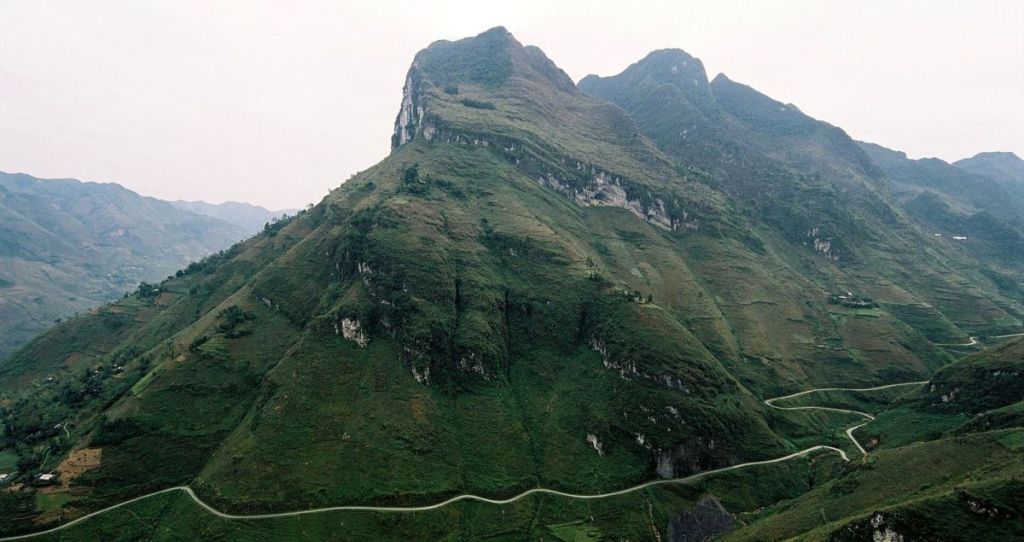
Easy Rider-style trips with a driver. On long routes such as the Ha Giang Loop, the Hai Van Pass or the Central Highlands, many travelers hire a local rider and sit as a passenger. You still enjoy the open road, without the legal and insurance worries.
Bicycles and walking. In smaller towns such as Hoi An or Vung Tau’s beachfront, a bicycle is often enough. Many hotels and apartment buildings lend or rent bicycles for a small fee.
Photos: Ho Chi Minh Tours image library.
| Option | Licence needed? | Best for | Main drawback |
|---|---|---|---|
| Self-ride rental scooter | Yes (A1 or valid IDP) | Long stays, flexible exploring | Legal and insurance risk without a licence |
| Grab / Be / Xanh SM bike | No | City trips, airport runs | No luggage space beyond a small bag |
| Guided motorbike or Vespa tour | No | First-time visitors, food and culture | Fixed route and time |
| Hired rider for a road trip | No | Mountain loops and passes | Higher daily cost than renting |
| Bicycle | No | Old towns, beachfront roads | Heat and distance |
Will travel insurance cover a motorbike accident in Vietnam?
Only if your policy includes motorcycle riding and you were riding legally. Most standard policies either exclude motorbikes entirely or include them only as an add-on, and nearly all require the rider to hold a licence valid in the country for the vehicle being ridden. Many also cap engine size, often at 125 cc, and require a helmet. If you are riding without a valid licence, assume you have no cover.
Read the exact wording in the “hazardous activities” or “motorcycling” section of your policy before you travel, and ask the insurer in writing if anything is unclear. Check whether it covers you as a passenger on a motorbike taxi or guided tour as well; most do, but some exclude any two-wheeler. Medical treatment at international hospitals in Ho Chi Minh City and Hanoi is good but expensive, and an evacuation flight can cost far more than the trip itself.
Rental shops in Vietnam rarely offer damage or theft insurance for the bike. Some motorbikes carry only the compulsory third-party liability insurance, which covers injury to other people within set limits but not your own bike or your own injuries. Ask the shop to show you the third-party certificate and keep a photo of it.
What should you check before your first ride?
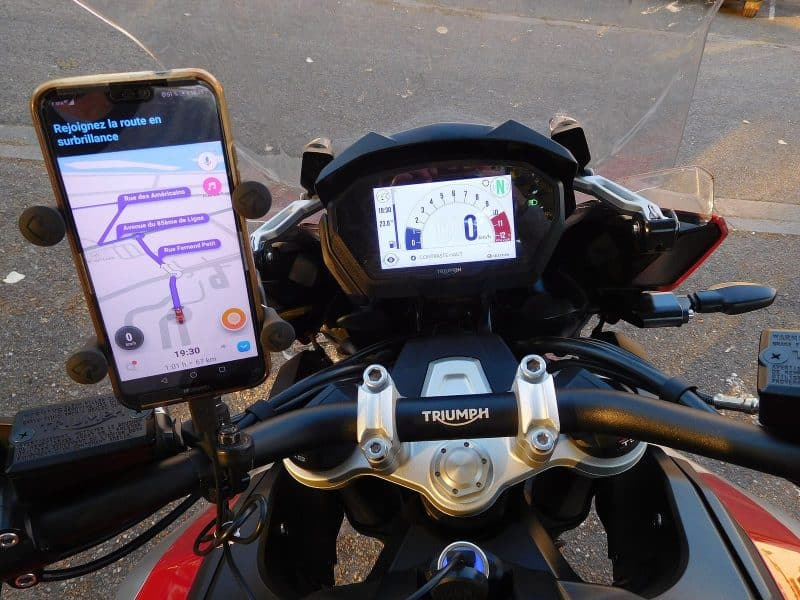
Before your first ride, make sure your paperwork, the bike and your route are ready. Carry your licence or IDP with your home licence, the registration card, and a copy of your passport. Save the rental shop’s number and your accommodation’s address in Vietnamese. Plan short first trips on quieter streets, and use a phone mount and offline maps rather than holding your phone, which is also a fineable offence.
- Learn how the horn, indicators and kill switch work before joining traffic.
- Fill up at branded stations (Petrolimex, PVOIL, Saigon Petro) rather than roadside bottles.
- Lock the bike and use guarded parking; take the parking ticket and keep it safe.
- Never ride after drinking, even one beer; Vietnam’s limit is zero.
- In heavy rain, stop under a bridge or café awning and wait; storms in the south usually pass within an hour.
Local tip: Vietnamese petrol stations sell two common grades, RON 95 and E5 RON 92. Rental scooters run fine on either, but ask the shop which they prefer. Staff fill the tank for you; just say đầy bình (fill it up) or name an amount, such as “50,000”.
Photos: Ho Chi Minh Tours image library.
Can you ride from Ho Chi Minh City to Vung Tau by motorbike?
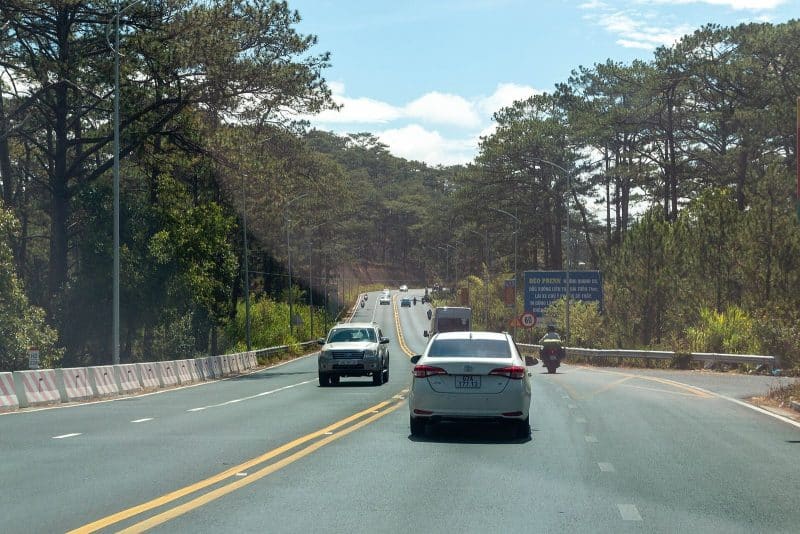
Yes, but the route needs care. Motorbikes are not allowed on the Ho Chi Minh City–Long Thanh–Dau Giay Expressway or the Bien Hoa–Vung Tau Expressway, so riders use National Highway 51, which carries heavy trucks and container traffic, especially around Phu My. The ride is about 100 km and takes roughly two and a half to three hours with a rest stop. Only experienced, licensed riders should attempt it, and only in daylight.
Many visitors prefer to take the fast boat, a limousine van or a bus to Vung Tau and then rent a scooter locally for short trips along the coast. Riding along Thuy Van Street by Back Beach (Bãi Sau), up to the Christ of Vung Tau statue on Small Mountain (Núi Nhỏ) or around Big Mountain (Núi Lớn) is much calmer than city riding, and distances are short. The same rules apply: licence, helmet, zero alcohol.
If you are planning a longer stay by the sea, an apartment with a parking space and a building management team that can recommend reliable rental shops makes life easier. If you stay with us, the Vung Tau Pearl team can point you to rental shops near the beach and help you check what a shop includes before you hand over a deposit.
Planning a stay in Vung Tau? The Vung Tau Pearl team can help you find an apartment close to Back Beach, with parking and easy access to the coast road. Message us for current availability and rates.
Frequently Asked Questions
Do I need a licence to rent a scooter in Vietnam?
You need a licence to ride, not to rent. Shops rarely check, but the law requires a Vietnamese licence or a 1968-convention International Driving Permit with the motorcycle category, carried with your home licence. Without one, you face fines of 2–8 million VND and your insurance will probably not cover an accident.
Is a US International Driving Permit valid in Vietnam?
No. The United States issues IDPs under the 1949 Geneva Convention, and Vietnam recognizes only permits issued under the 1968 Vienna Convention. American visitors who want to ride legally need a Vietnamese licence, which requires residence, or should use motorbike taxis and guided tours instead.
What licence class covers a 125 cc scooter?
Class A1 covers motorcycles up to 125 cc and electric motorcycles up to 11 kW under Law 36/2024/QH15. That includes common rental scooters such as the Honda Vision, Honda Lead and Honda Wave. Bikes above 125 cc, such as a 150 cc Air Blade or an XR150, need class A.
How much is the fine for riding without a licence in Vietnam?
Under Decree 168/2024/ND-CP, effective January 1, 2025, the fine is 2–4 million VND for a motorbike up to 125 cc and 6–8 million VND for one above 125 cc. Police may also hold the bike temporarily, and the rental shop can charge you for the lost days.
Can I convert my foreign motorcycle licence in Vietnam?
Yes, if you hold a residence card valid for at least three months. You submit your foreign licence with a notarized translation, passport, visa and photos to the traffic police licence office. Conversion gives you only the classes your home licence already covers.
How much does it cost to rent a scooter in Ho Chi Minh City?
An automatic scooter typically costs around 150,000–250,000 VND per day, as of mid-2026, with monthly rentals from about 1.5 million VND. Larger or newer bikes cost more, and prices rise during Tet and other holidays. Fuel and parking are extra.
Should I leave my passport as a rental deposit?
Avoid it if you can. You need your passport for hotel registration, banking and any police check. Offer a photocopy plus a cash deposit instead; most reputable shops accept 2–5 million VND for a standard scooter. If a shop insists on the original, consider another shop.
Is it safe to ride a motorbike in Saigon traffic?
It is manageable for experienced, licensed riders but risky for beginners. Traffic is dense, unpredictable and heaviest during weekday rush hours. Start on quiet streets early in the morning, ride slowly and predictably, and never ride after drinking. If you are new to motorbikes, take a guided tour or a motorbike taxi instead.
Do passengers need to wear a helmet in Vietnam?
Yes. Both rider and passenger must wear a fastened helmet, and each can be fined 400,000–600,000 VND. Grab and other ride-hailing drivers provide a helmet for passengers; ask for a different one if it does not fit or the strap is broken.
Can I drink a beer and then ride in Vietnam?
No. Vietnam has a zero-alcohol rule for all drivers and riders. Even a small amount of alcohol on your breath brings a fine starting at 2 million VND and licence suspension, and higher levels reach 8–10 million VND. Use a ride-hailing app after an evening out.
Will my travel insurance cover a scooter accident?
Only if your policy includes motorcycling and you were riding legally with a valid licence and helmet. Many policies also limit engine size to 125 cc. Riding without a valid licence usually voids cover for that accident, including medical costs.
Can I ride a motorbike on Vietnamese expressways?
No. Motorbikes are not allowed on expressways in Vietnam, including the routes linking Ho Chi Minh City with Long Thanh, Dau Giay and Vung Tau. Riders use national highways such as Highway 51, which carry heavy trucks, so plan long rides carefully and in daylight.
What is the best alternative to renting a motorbike?
For city trips, motorbike taxis booked through Grab, Be or Xanh SM are cheap, legal and come with a helmet. For sightseeing, a guided motorbike or Vespa tour lets you ride through the city with a licensed local rider. For mountain loops, hire a local rider and travel as a passenger.
Sources
- LuatVietnam: Law on Road Traffic Order and Safety 2024, class A1 licences
- Vietnam Law Magazine: International driving permits in Vietnam (Circular 12/2025/TT-BCA)
- Thu Vien Phap Luat: Fines for riding without a licence under Decree 168/2024
- Vietnam Tourism: What an IDP covers for motorbikes in Vietnam
- VietnamSpot: Motorbike rental prices in Vietnam (July 2026 survey)

Bài viết liên quan

Bảng Giá Căn Hộ TT Genesis Mới Nhất tháng 10/2026
Giá TT Genesis bao nhiêu? Cập nhật đến ngày 29/10/2026, dữ liệu tham khảo gần...

The Collectors’ Có Những Concept Nội Thất Nào?
The Collectors’ sở hữu sáu concept thiết kế, gồm năm concept đột phá là Galleria...

Bảo hành căn hộ TT Genesis trong bao lâu?
Căn hộ TT Genesis được bảo hành 60 tháng kể từ ngày nghiệm thu tòa...

Những Yếu Tố Quyết Định Thanh Khoản Đất Nền Dragon Eden
Thanh khoản đất nền Dragon Eden được hỗ trợ bởi năm yếu tố: Sổ riêng...

Hành Lang Thoát Hiểm Và Khoảng Lùi Sau Nhà Tại Dragon Eden
Tại Dragon Eden, chủ đầu tư đã chừa sẵn các lô đất trong mỗi dãy...

Tầng 20–21 Saigon Mia Có Bao Nhiêu Căn Và Thuộc Những Block Nào?
Tầng 20 và tầng 21 Saigon Mia đều thuộc phạm vi của cả ba block...

Hệ Thống Y Tế – Mua Sắm – Giải Trí Quanh TT Genesis
Hệ thống y tế – mua sắm – giải trí quanh TT Genesis là một...

99+ Tiện Ích The Privé Có Gì? Từ Trong Nhà Đến Ven Sông
Nếu vị trí ba mặt giáp sông tạo nên lợi thế tự nhiên hiếm có...