
Which region Vietnam first-timers should pick depends on the month and the trip style: the North for mountains and Ha Long Bay (best March–May and September–November), the Central coast for heritage towns and beaches (February–August), and the South for dry-season warmth (December–April). Allow 4–5 days per region, or two weeks for all three.
Key facts (as of November 2026)
- Vietnam stretches about 1,700 km by rail from Hanoi to Ho Chi Minh City, so the three regions have three different climates at the same time of year.
- Best months: North March–May and September–November; Central coast February–August; South December–April.
- Flights between Hanoi, Da Nang and Ho Chi Minh City take about 1 hour 20 minutes to 2 hours 10 minutes, with advance one-way fares of roughly 800,000–1,500,000 VND (about USD 32–60), as of November 2026.
- The Reunification Express train takes roughly 33–35 hours from Hanoi to Ho Chi Minh City on the faster services, as of June 2026.
- The e-visa is valid for up to 90 days and costs USD 25 (single entry) or USD 50 (multiple entry), as of November 2026; citizens of 25 countries get 45 days visa-free.
- Since July 1, 2025 Vietnam has 34 provinces and cities: Ho Chi Minh City now includes the former Ba Ria–Vung Tau and Binh Duong provinces, and Hoi An is part of Da Nang city.
- A sensible first trip is about 5 days in the North, 4 in the Central region and 5 in the South.
Written by the Vung Tau Pearl team. Last updated November 27, 2026. Prices, timetables and visa rules change; check the official sources at the end before you book.
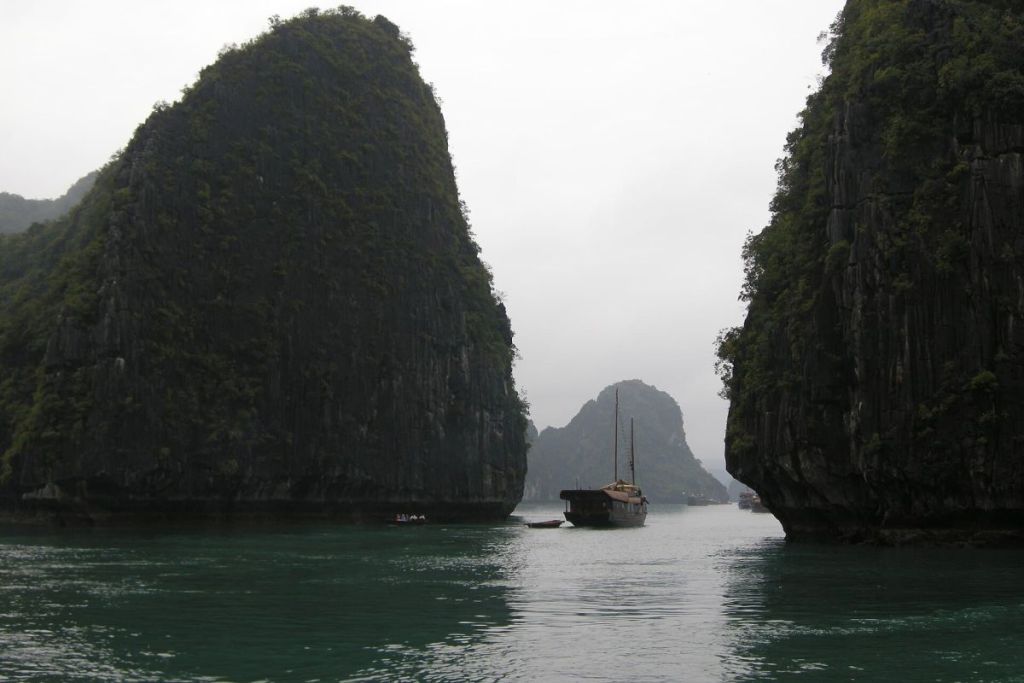
Photos: 1) Vyacheslav Argenberg, CC BY 4.0; 2) Christophe95, CC BY-SA 4.0; 3) Diego Delso, CC BY-SA 3.0; via Wikimedia Commons.
Which region of Vietnam should you visit first?
Visit the region whose best weather matches your travel dates, then add a second region only if you have more than a week. Vietnam is long and narrow, and a single country-wide “best time” does not exist. In late November, for example, Hanoi is cool and dry, the coast around Hue and Hoi An is in its wettest stretch, and the South is moving into its dry season.
Each region also has a clear character. The North (miền Bắc) is the oldest part of the country, with the capital Hanoi (Hà Nội), limestone bays and high mountains near the Chinese border. The Central region (miền Trung) holds the former imperial capital, a preserved trading port and long sandy beaches. The South (miền Nam) is warm all year, flatter, and built around Ho Chi Minh City (Thành phố Hồ Chí Minh) and the waterways of the Mekong Delta.
The table below is the short version. The sections after it explain each region in detail, so you can decide which region of Vietnam deserves most of your days.
| Region | Best months | Weather to expect | Signature experiences | Typical dishes | Days needed |
|---|---|---|---|---|---|
| North (miền Bắc) | March–May, September–November | Four seasons; cool winter (14–20°C in Hanoi in December), hot wet summer | Hanoi Old Quarter, Ha Long Bay cruise, Ninh Binh, Sapa trekking, Ha Giang loop | Phở, bún chả, chả cá | About 5 |
| Central (miền Trung) | February–August | Hot dry summer; heavy rain September–December, typhoon peak September–November | Hue Imperial City, Hoi An Ancient Town, My Son, Phong Nha caves, Da Nang beaches, Hai Van Pass | Bún bò Huế, mì Quảng, cao lầu | About 4 |
| South (miền Nam) | December–April | 25–36°C all year; dry December–April, short heavy showers May–November | Ho Chi Minh City, Cu Chi Tunnels, Mekong Delta, Vung Tau, Phu Quoc, Con Dao | Hủ tiếu, cơm tấm, bánh xèo | About 5 |
Temperature figures are monthly averages published in July 2026; day counts follow common first-timer itineraries, as of November 2026.
Useful Vietnamese
- miền Bắc – the North; miền Trung – the Central region; miền Nam – the South
- Bắc / Trung / Nam – north / central / south (you will see these on menus, as in “phở Bắc”)
- mùa khô – dry season; mùa mưa – rainy season; bão – typhoon
- sân bay – airport; ga – train station; vé – ticket
- bãi biển – beach; phố cổ – old town; núi – mountain
What is North Vietnam like, and who does it suit?
North Vietnam suits travelers who want history, mountain scenery and cooler weather, and it works best from March to May and from September to November. It is the only region with a real winter. Hanoi averages 14–20°C in December and 15–20°C in January, then climbs to 27–35°C in June, when the heaviest rain arrives and lasts through August (monthly averages published July 2026).
Most itineraries start in Hanoi’s Old Quarter (Phố Cổ), a grid of narrow trading streets around Hoan Kiem Lake (Hồ Hoàn Kiếm). Two or three days cover the lake, the Temple of Literature (Văn Miếu), the Ho Chi Minh Mausoleum area and a lot of street food. From Hanoi, three side trips define the region:
- Ha Long Bay (Vịnh Hạ Long): a UNESCO World Heritage seascape of limestone islands, usually seen on a day boat or an overnight cruise. July is the wettest month on the bay, and winter days can be misty.
- Ninh Binh (Ninh Bình) and Trang An (Tràng An): a UNESCO-listed landscape of rivers, caves and karst hills about two hours south of Hanoi, explored by rowing boat and bicycle.
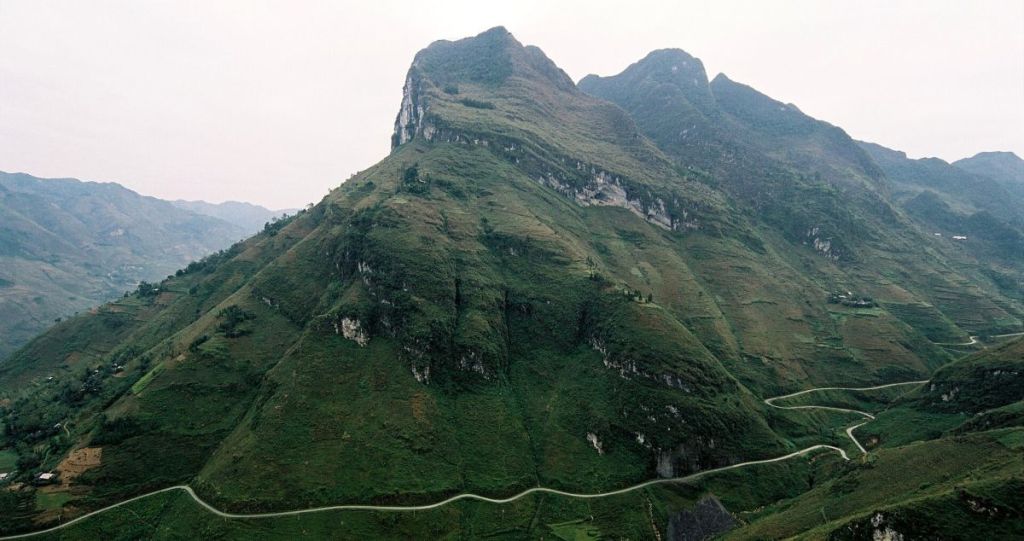
- Sapa (Sa Pa) and Ha Giang (Hà Giang): the far northern mountains, with rice terraces, trekking between villages and the Ha Giang loop, a multi-day road circuit usually done by motorbike with a local driver.


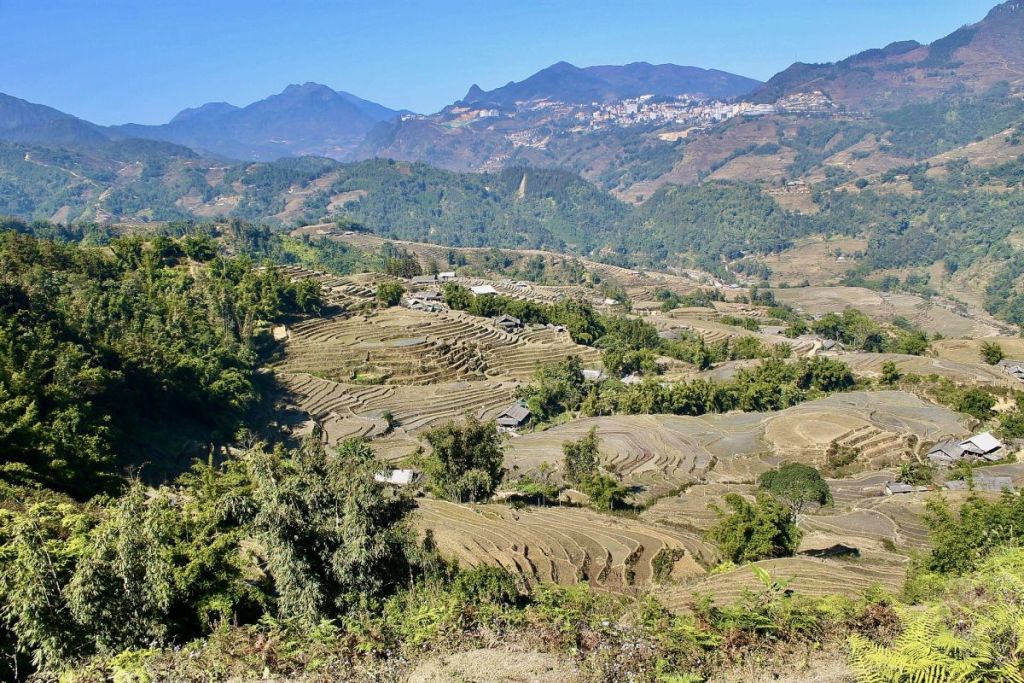
Photos: 1) Richard Mortel from Riyadh, Saudi Arabia, CC BY 2.0; 2) Jakub Hałun, CC BY 4.0; 3) Eerin25, CC0; 4) Khánh Hmoong, CC BY 2.0; via Wikimedia Commons.
The mountains are much colder than Hanoi. In Sapa and Ha Giang, December days sit around 10–18°C and nights drop to about 5°C or lower, with frequent fog and occasional snow on the highest peaks (as of July 2026). Pack real layers if you come between December and February. Terraces are at their greenest in summer and turn gold before the autumn harvest, which is one reason September to November is so popular.
Plan about five days for a first visit: two or three in Hanoi, one or two on Ha Long Bay, and one in Ninh Binh. Add three or four more days if you want Sapa or Ha Giang, because both involve a long transfer from the capital. If you take a bay cruise from the Ha Long International Passenger Port, the port’s own passenger ticket costs 40,000 VND one way or 80,000 VND round trip as of July 2026; bay sightseeing fees are charged separately and are usually built into cruise prices.
Local tip: Visitors from warm countries often arrive in Hanoi in January with only T-shirts. Northern guesthouses rarely have heating, so a light down jacket and warm socks make a real difference, especially on a boat in Ha Long Bay or in the mountains.
What is Central Vietnam like, and who does it suit?
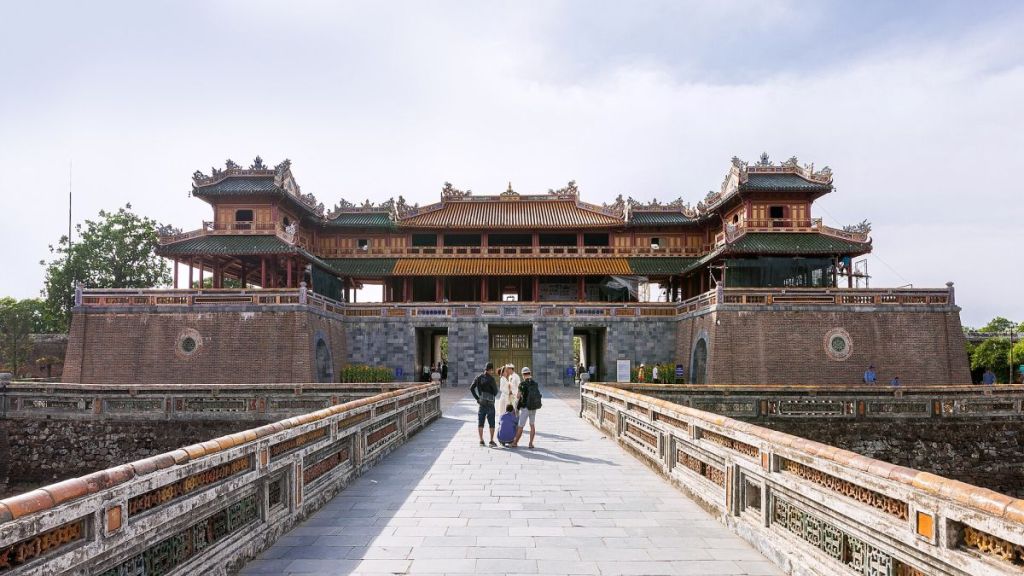
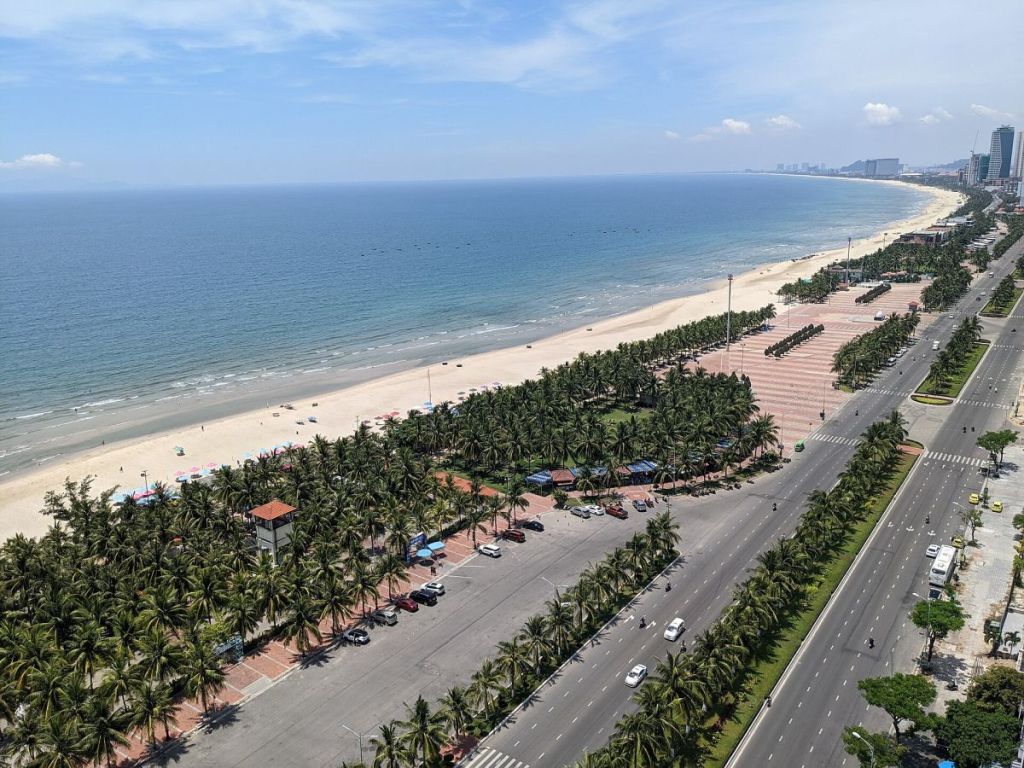
Central Vietnam suits travelers who want heritage towns and beach time in one compact area, and it is at its best from February to August. Da Nang averages 20–25°C in February, 28–34°C in April and 30–36°C in June. From September to December the coast receives most of its annual rain, typhoon risk peaks from September to November, and October is the usual month for flooding in Hue and Hoi An (as of July 2026).
The region’s core is a 130 km strip with three bases close together:
- Hue (Huế): the Nguyen dynasty capital. The Imperial City (Đại Nội) and the royal tombs along the Perfume River (Sông Hương) form a UNESCO World Heritage complex. An adult ticket for the Imperial City is listed at about 200,000 VND as of January 2026; confirm at the gate, because combination tickets with the tombs change from time to time.
- Da Nang (Đà Nẵng): a modern beach city with the region’s main airport, My Khe Beach (Bãi biển Mỹ Khê) and the Marble Mountains (Ngũ Hành Sơn).
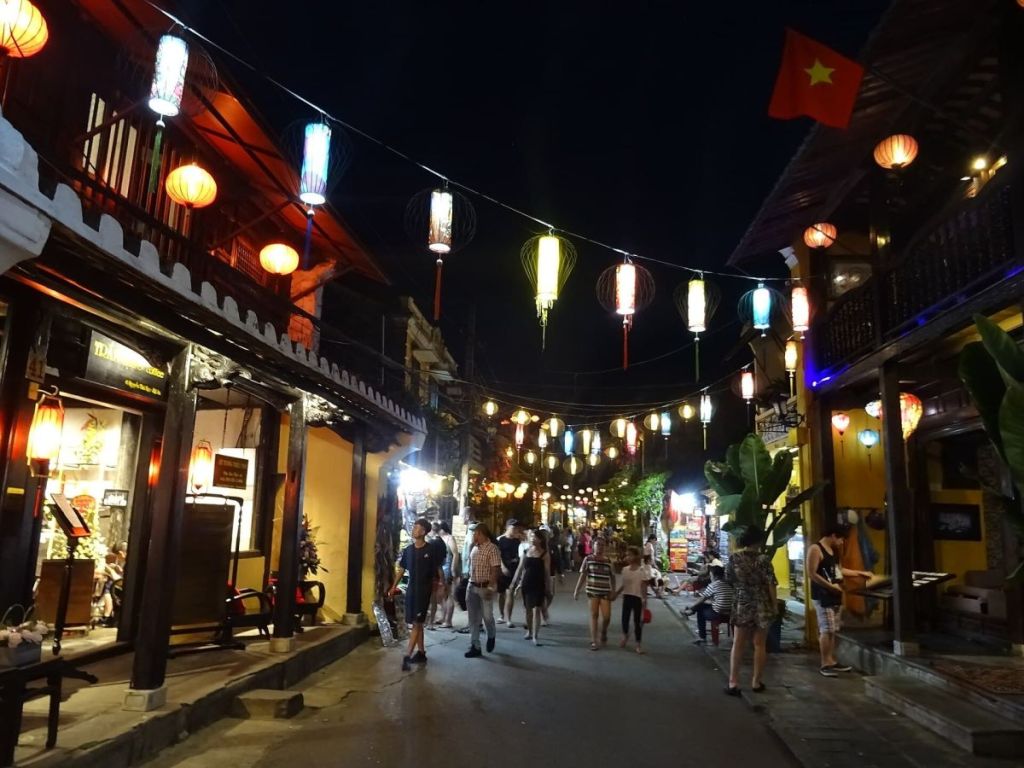
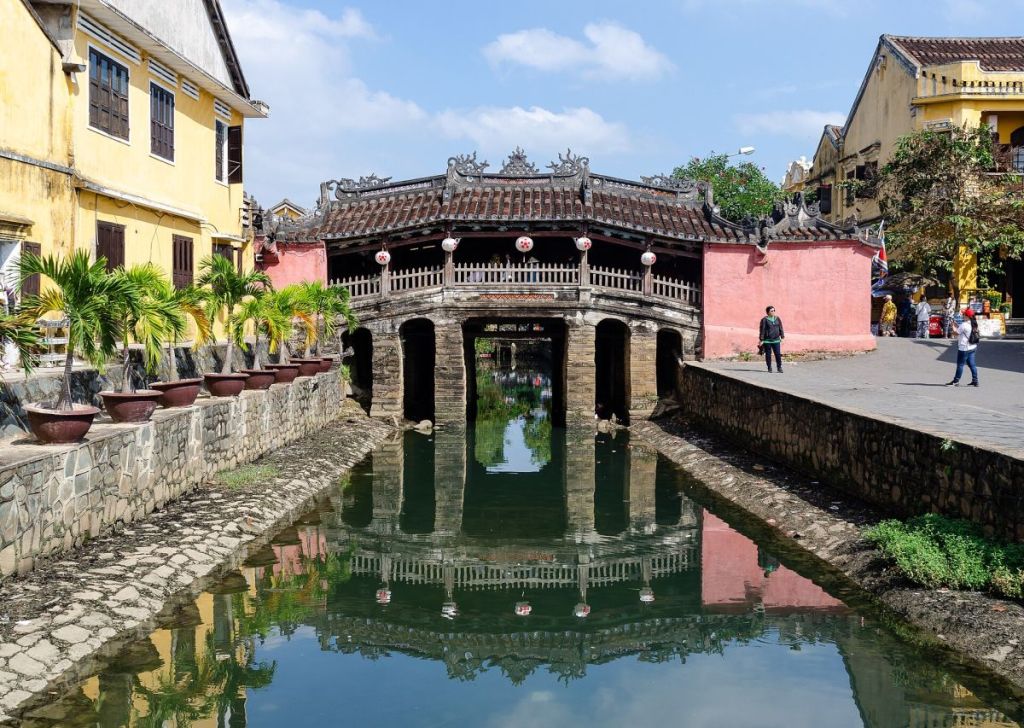
- Hoi An Ancient Town (Phố cổ Hội An): a UNESCO-listed trading port of yellow shophouses, tailors and lanterns, about 45 minutes by car from Da Nang airport (as of October 2026). Since the July 2025 mergers, Hoi An and the Cham temple ruins of My Son Sanctuary (Thánh địa Mỹ Sơn) are administratively part of Da Nang city.
Hoi An’s old-town ticket changed in early 2026. Under the announcement dated January 28, 2026, visitors choose an 80,000 VND ticket (the old town plus the Japanese Covered Bridge or Quan Cong Temple and two other sites) or a 120,000 VND ticket (which adds a museum and three other sites). The price is the same for all nationalities and the ticket is valid for up to three days. The walking streets run from 09:00 to 21:30 in summer and to 21:00 in winter, as of early 2026.
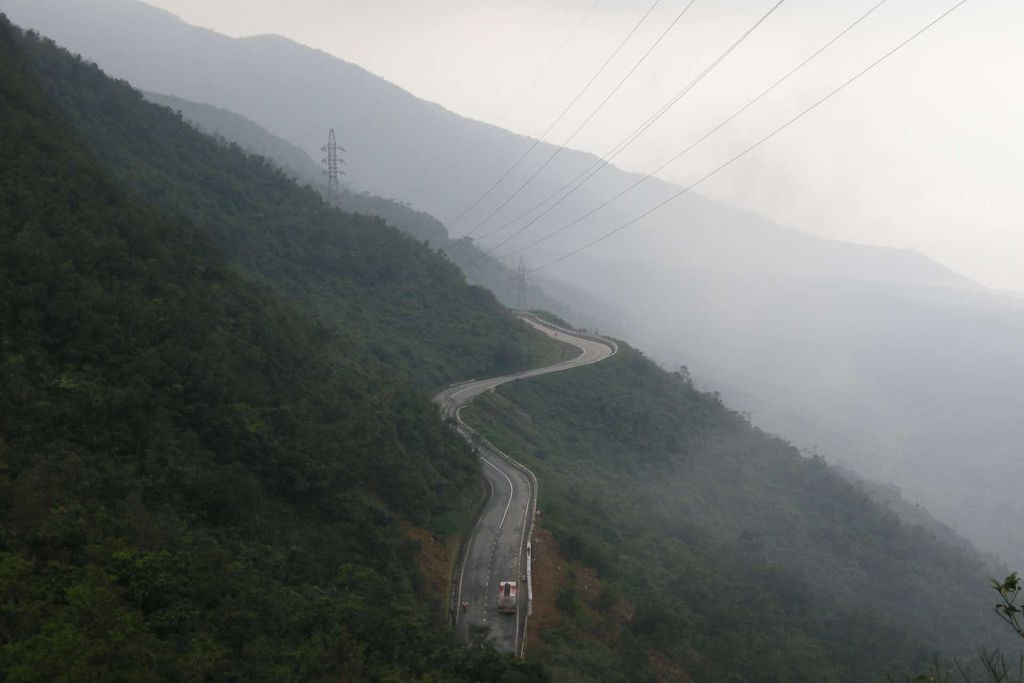
Between Hue and Da Nang, the Hai Van Pass (Đèo Hải Vân) climbs over a mountain spur above the sea; you can cross it by road or watch the same coastline from the train. Farther north, Phong Nha–Ke Bang National Park (Vườn quốc gia Phong Nha – Kẻ Bàng) is a UNESCO site known for some of the world’s largest caves. Farther south, Nha Trang follows a different calendar from Hue and Hoi An: its best beach months run from March to August, June and July are among its driest, and October and November bring rain and rough seas (as of January 2026).
Plan about four days: one or two in Hue, two in Hoi An, and a beach afternoon in Da Nang. Add two days for Phong Nha. If your trip falls between late September and early December, keep the Central leg short and flexible, or swap it for extra days in the North or South.

Photos: 1) Supanut Arunoprayote, CC BY 4.0; 2) Steffen Schmitz (more photos), CC BY-SA 4.0; 3) Vyacheslav Argenberg, CC BY 4.0; 4) Jpatokal, CC BY-SA 4.0; 5) Santi LLobet, CC BY 2.0; via Wikimedia Commons.
What is South Vietnam like, and who does it suit?
South Vietnam suits travelers who want reliable warmth, city energy, river life and easy beach breaks, and its best months are December to April. Ho Chi Minh City stays between about 25°C and 36°C all year. The dry season runs from December to April; from May to November rain usually comes as short, heavy afternoon showers, and typhoons rarely reach this far south (as of July 2026).
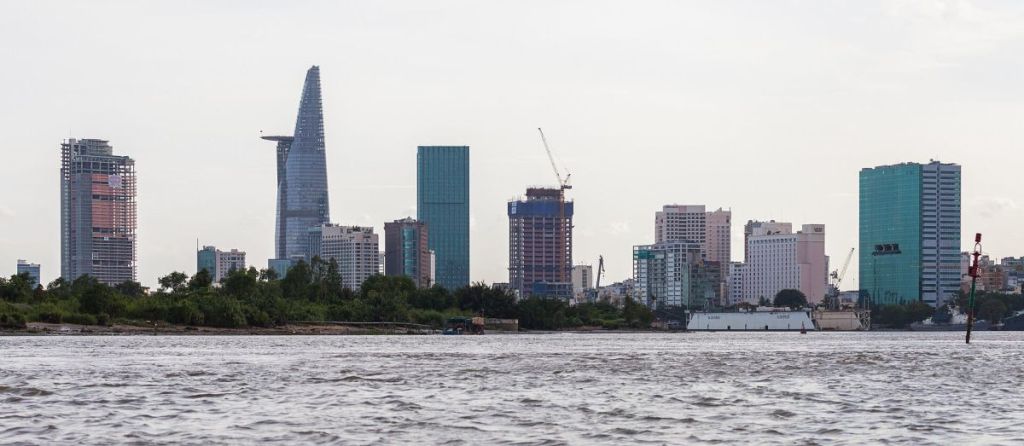
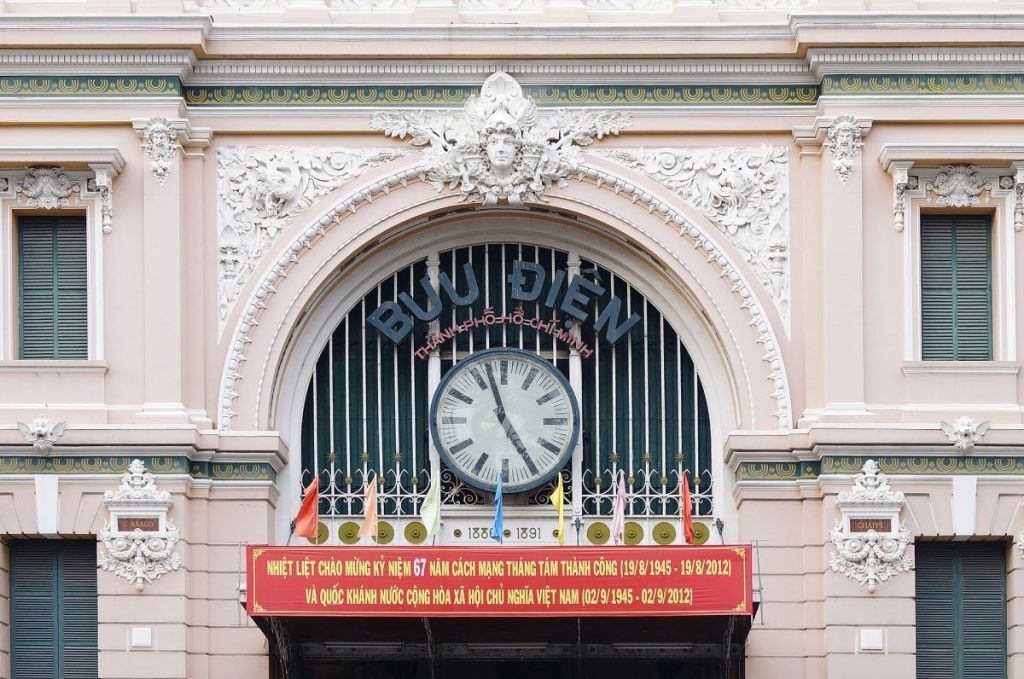
Ho Chi Minh City, still called Saigon (Sài Gòn) by most residents, is the country’s largest city and the usual gateway. Two days cover the War Remnants Museum (Bảo tàng Chứng tích Chiến tranh), the Reunification Palace (Dinh Độc Lập), Ben Thanh Market (Chợ Bến Thành) and the Chinese temples of Cho Lon (Chợ Lớn). If you are unsure how much time the city deserves, the team at Ho Chi Minh Tours has a frank breakdown of whether the city is worth your time.
The classic day trips are these:
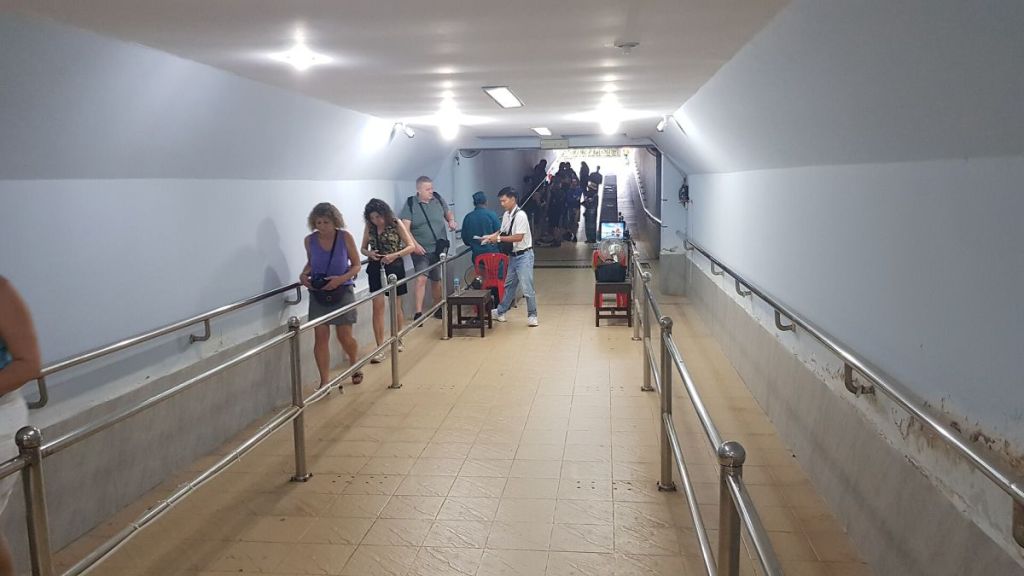
- Cu Chi Tunnels (Địa đạo Củ Chi): a wartime tunnel network about 70 km northwest of the center, open 07:00–17:00. Foreign visitors pay about 135,000 VND as of August 2026, and a half-day tour takes roughly 5.5–7 hours door to door.
- Mekong Delta (Đồng bằng sông Cửu Long): canals, fruit orchards and floating markets. A day trip reaches the nearer towns; an overnight stay shows more of river life.
- Vung Tau (Vũng Tàu): the closest beach city to Saigon, roughly two hours away, and since July 1, 2025 part of Ho Chi Minh City itself.
For longer beach stays, Phu Quoc (Phú Quốc) is the main island resort, best from about November or December to March or April, with heavy rain and rough seas from June to September. Con Dao (Côn Đảo) is a quieter archipelago with a former prison complex and protected reefs. For a break from the heat, Da Lat (Đà Lạt) in the southern highlands is much cooler than the coast all year.
Plan about five days: two in Ho Chi Minh City, one for Cu Chi, one or two in the Mekong Delta, and one or two on the coast. The South is also the easiest region for a short trip, because flights, day tours and beach transfers all start from one city.

Photos: 1) Prenn, CC BY-SA 3.0; 2) Christophe95, CC BY-SA 4.0; 3) Andre Hospers, CC BY-SA 4.0; via Wikimedia Commons.
Add a beach base to your southern leg. A Vung Tau Pearl apartment near Back Beach (Bãi Sau) gives you a quiet seaside stop after Saigon, with the city still roughly two hours away for your onward flight.
Which region of Vietnam has the best weather each month?
The South is the safest choice from December to February, the whole country works in March and April, the Central coast leads from May to August, and the North is strongest in October and November. The table gives average daily temperature ranges for one reference city in each region, followed by the region that usually has the best conditions that month.
| Month | North (Hanoi) | Central (Da Nang) | South (Ho Chi Minh City) | Best pick |
|---|---|---|---|---|
| January | 15–20°C, cool, gray | 18–23°C, some rain | 26–32°C, dry | South |
| February | 16–22°C | 20–25°C, drying out | 27–33°C, dry | South, Central |
| March | 18–25°C | 24–30°C | 28–34°C, dry | All three |
| April | 22–30°C | 28–34°C | 29–36°C, hottest | All three |
| May | 25–33°C | 29–35°C, dry | 28–35°C, rains begin | Central, North |
| June | 27–35°C, wet | 30–36°C, dry | 27–33°C, showers | Central |
| July | 27–34°C, wettest | 30–35°C, dry | 27–32°C, showers | Central |
| August | 27–33°C, wet | 29–34°C | 27–32°C, showers | Central |
| September | 25–31°C | 28–33°C, storms start | 27–32°C, showers | North |
| October | 20–28°C, clear | 25–30°C, flood risk | 26–32°C, showers | North |
| November | 17–24°C, dry | 22–28°C, wet | 25–31°C, rain easing | North, South |
| December | 14–20°C, cool | 18–24°C, wet | 25–32°C, dry | South |
Averages published July 2026; individual years vary, and storms can arrive outside the usual window.
Three patterns are worth remembering. First, summer in the North is hot and wet at the same time, so June to August is better spent on the Central coast. Second, the Central rainy season arrives late: September to December, exactly when many visitors assume all of Southeast Asia is drying out. Third, the South’s rainy season rarely ruins a trip, because showers are short, but sea conditions around Phu Quoc are poor from June to September.
Local tip: If you travel in late November or December, build the trip around the South and the North and treat Hue and Hoi An as optional. Watch the forecast a few days ahead and keep the Central leg on flexible bookings.
How does the food change from north to south?
Food gets spicier as you move from the North to the Central region and sweeter as you continue to the South. The same dish name can mean a noticeably different bowl 1,000 km away, so eating your way down the country is one of the simplest ways to feel the regional differences.
Photos: 1) Codename5281, CC BY-SA 3.0; 2) Kham Tran – www.khamtran.com, CC BY 3.0; 3) Ser Amantio di Nicolao, CC BY-SA 4.0; via Wikimedia Commons.
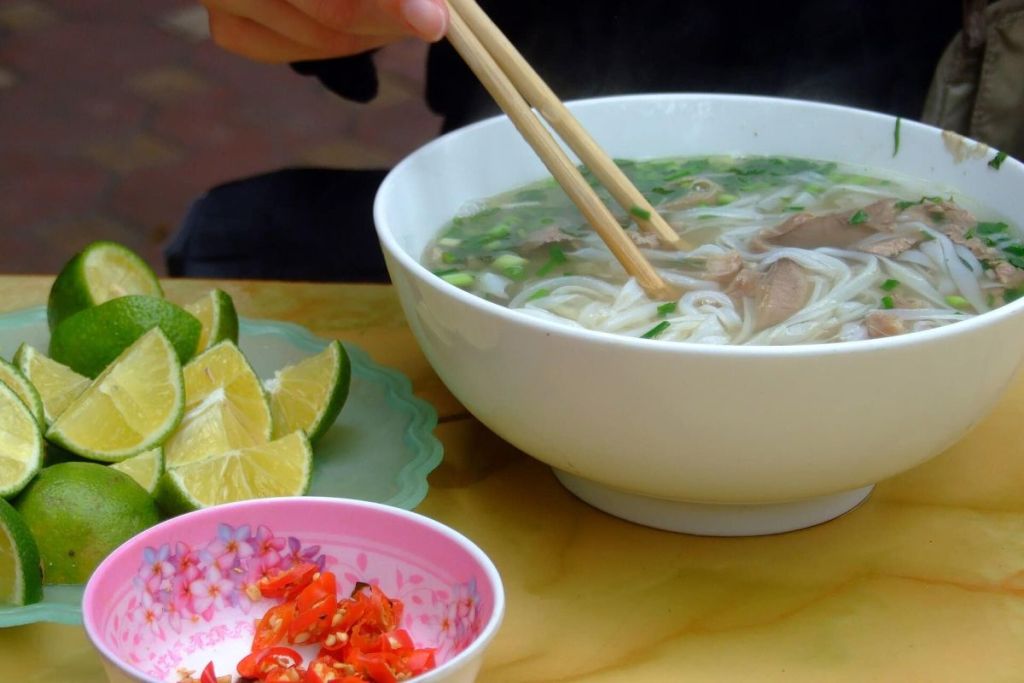
- North: subtle and balanced. Cooks use little sugar and rely on black pepper more than chili. Hanoi is the home of phở with a clear beef broth, bún chả (grilled pork with rice noodles and a sweet-sour dipping sauce), chả cá (turmeric fish fried at the table) and bánh cuốn (steamed rice rolls). A bowl of phở or a serving of bún chả runs about 50,000–70,000 VND as of July 2026.
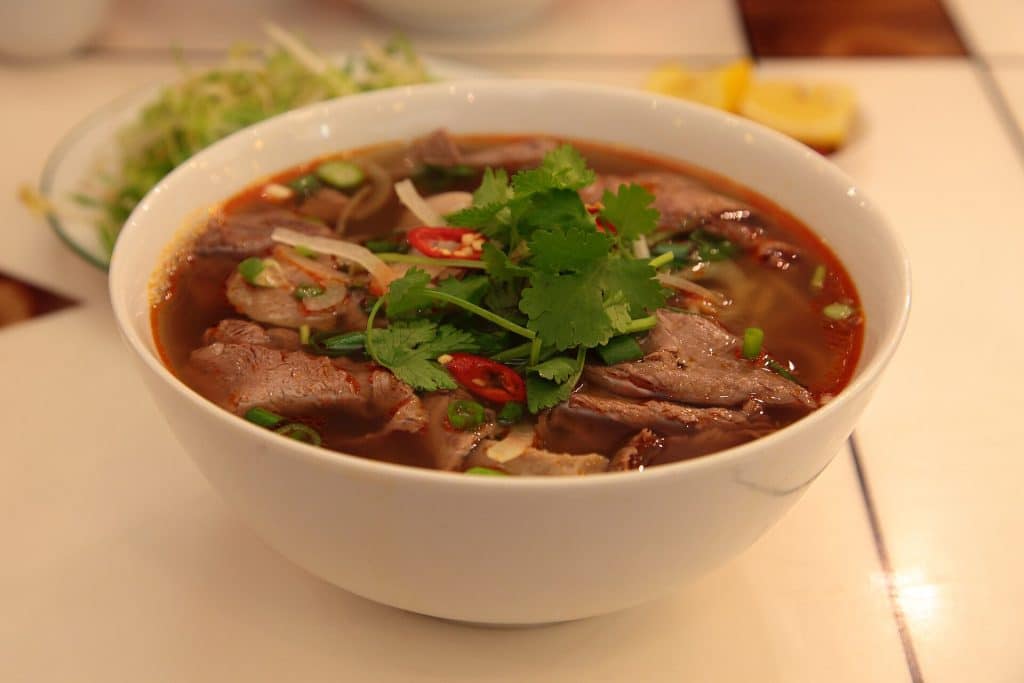
- Central: bold and spicy. Hue’s court kitchens left a tradition of small, elaborate dishes and plenty of chili and fermented shrimp paste. Try bún bò Huế (spicy beef noodle soup, about 40,000–60,000 VND), mì Quảng (turmeric noodles with very little broth, about 30,000–50,000 VND) and cao lầu, the chewy noodle dish found only in Hoi An (about 35,000–50,000 VND), all as of July 2026.
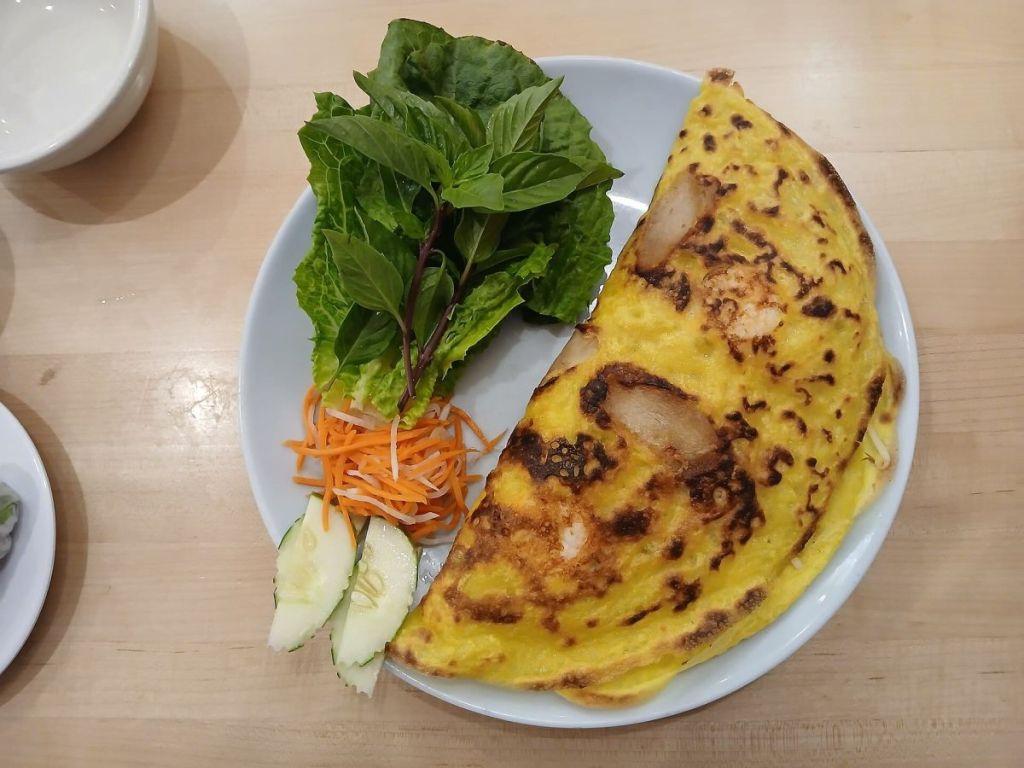
- South: sweet and generous. Coconut milk, palm sugar and big plates of fresh herbs appear everywhere. Look for hủ tiếu (a lighter, sweeter noodle soup, about 40,000–60,000 VND), cơm tấm (broken rice with a grilled pork chop, about 35,000–55,000 VND), the large southern bánh xèo (crispy pancake) and gỏi cuốn (fresh spring rolls), as of July 2026. The Mekong Delta adds tropical fruit straight from the orchard.
An average street-food meal costs about 30,000–60,000 VND in all three regions as of July 2026, so food is not a reason to choose one region on budget grounds. Taste is: travelers who dislike heat tend to prefer Hanoi and Saigon, while chili lovers are happiest in Hue.
How do you get between the regions?
Fly between regions if you have less than three weeks; the three main airports are linked by frequent flights of about 1 hour 20 minutes to 2 hours 10 minutes. The train is slower but shows you the coast, and it works well for one scenic leg.
| Route | By air | By train | Typical cost (one way) |
|---|---|---|---|
| Hanoi – Da Nang | About 1 h 20–1 h 30 | About 15–16 h | Flights from about USD 30; often 1,000,000–1,500,000 VND (as of November 2026) |
| Hanoi – Hue | Short direct flight | About 12.5–13 h overnight | Soft sleeper about 1,140,000–1,220,000 VND (as of June 2026) |
| Hue – Da Nang | No practical flight | About 2.5 h, scenic | About 219,000 VND (as of June 2026) |
| Da Nang – Ho Chi Minh City | About 1 h 20–1 h 30 | About 17–18 h | Flights roughly 800,000–1,500,000 VND booked ahead (as of November 2026) |
| Hanoi – Ho Chi Minh City | About 2 h 05–2 h 10 | About 33–35 h | Flights from about 890,000 VND; soft sleeper about 1,670,000–1,760,000 VND (as of mid to late 2026) |
Fares are examples seen on airline and rail-guide pages on the dates shown and move with season and demand; prices rise sharply around Tết (Lunar New Year).
Flights
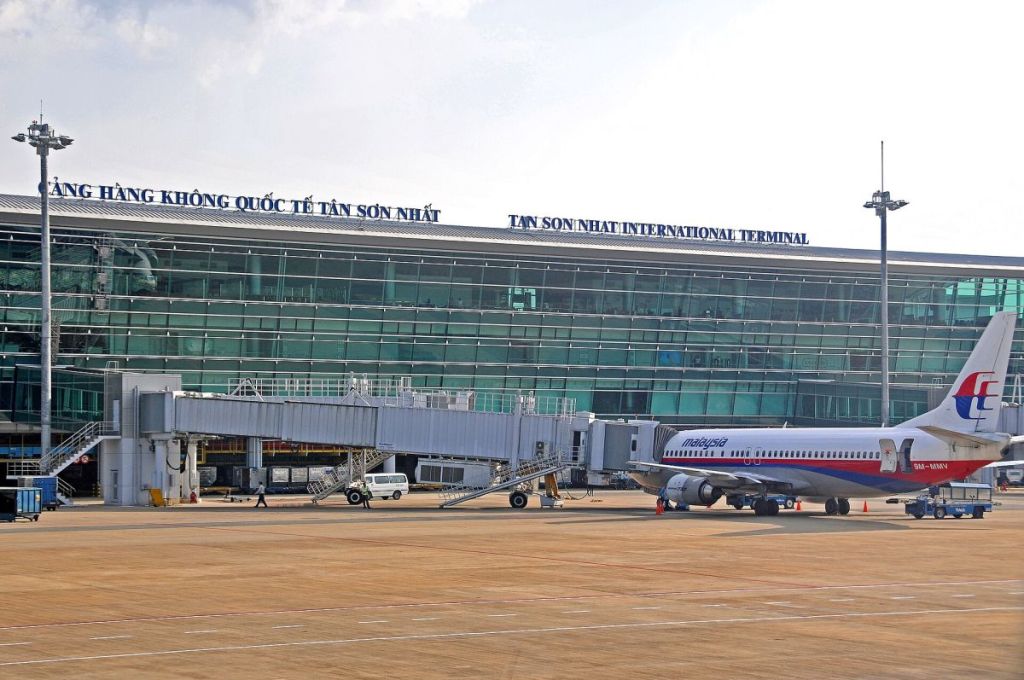
Domestic flights are the default choice. Vietnam Airlines, Vietjet Air, Bamboo Airways and several smaller carriers fly between Noi Bai Airport (Sân bay Nội Bài) in Hanoi, Da Nang Airport and Tan Son Nhat Airport (Sân bay Tân Sơn Nhất) in Ho Chi Minh City. As of November 2026, advance one-way fares on the main routes are roughly 800,000–1,500,000 VND (about USD 32–60), and the cheapest Hanoi–Da Nang seats appear from about USD 30.
One change affects the South. Long Thanh International Airport (Sân bay Long Thành), about 40 km east of central Ho Chi Minh City, is scheduled to begin commercial operations around December 2026, starting with some international flights, while domestic flights are expected to stay at Tan Son Nhat for now. The two airports are far apart, so check the airport code on every ticket: SGN is Tan Son Nhat and LTH is Long Thanh.
The Reunification Express train
The north–south railway (tàu Thống Nhất) runs 1,726 km from Hanoi to Ho Chi Minh City, with several departures a day. As of June 2026, the faster trains take roughly 33–35 hours end to end and slower ones close to 40 hours, so few visitors ride the whole line. The useful sections are the overnight sleeper from Hanoi to Hue (about 12.5–13 hours) and the daytime run from Hue to Da Nang (about 2.5 hours), where the track follows the cliffs below the Hai Van Pass.
Local transport
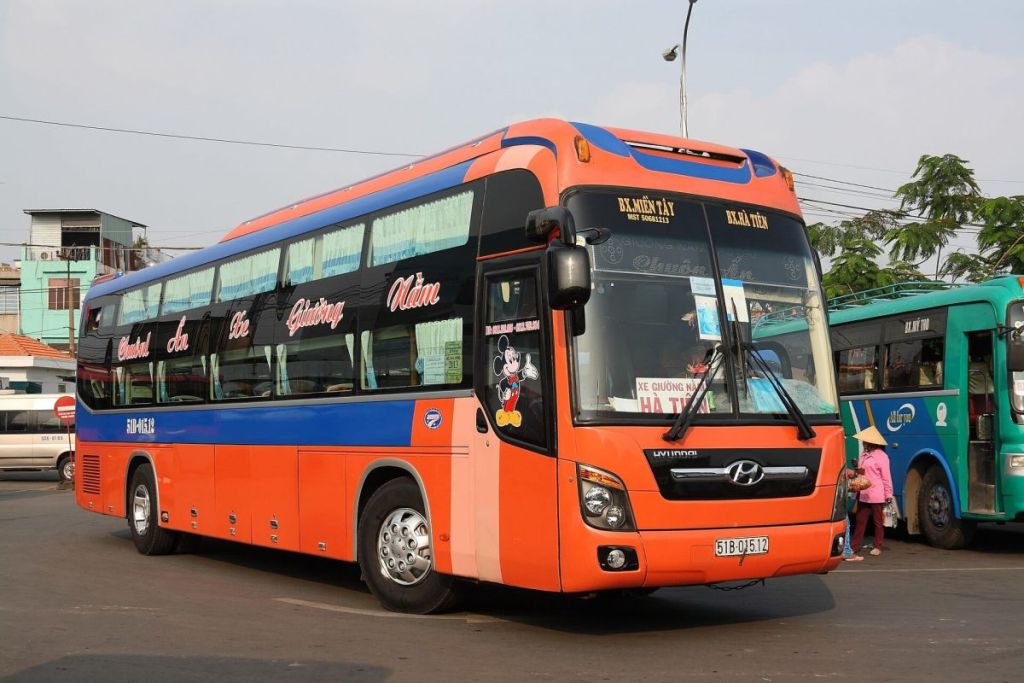
Within each region, ride-hailing apps, private cars, limousine vans and sleeper buses cover most routes. Many visitors also consider two wheels for the Ha Giang loop or the Hai Van Pass; read our guide to renting a motorbike in Vietnam before you decide, because license and insurance rules matter.
Photos: 1) Dennis G. Jarvis, CC BY-SA 2.0; 2) Ilya Plekhanov, CC BY-SA 4.0; 3) Elmschrat, CC BY-SA 4.0; via Wikimedia Commons.
How many days do you need in each region?
Plan about five days for the North, four for the Central region and five for the South, which makes two weeks the realistic minimum for all three. With less time, cutting a region gives a better trip than rushing through every stop.
- One week: choose one region, or two at most. North only: Hanoi (3 days), Ha Long Bay (2), Ninh Binh (1–2). South only: Ho Chi Minh City (2–3), Cu Chi (half a day), Mekong Delta (1–2), Vung Tau (2). A North-plus-Central week also works from February to May: Hanoi (3), Ha Long Bay (1), then a flight to Da Nang for Hoi An (3).
- Two weeks: the classic north-to-south route. Hanoi (days 1–4, with a Ninh Binh day trip), Ha Long Bay (days 5–6), a flight to Da Nang for Hoi An and a day in Hue (days 7–10), then a flight to Ho Chi Minh City for the city, Cu Chi and the Mekong Delta (days 11–14). In the Central rainy season, replace the middle section with Sapa or with extra beach days in the South.
- Three weeks: add depth. Keep the two-week route and add Sapa or the Ha Giang loop (3–4 days), Phong Nha (2 days), and a southern beach finish in Vung Tau, Phu Quoc or Con Dao (3–4 days). Three weeks is also when a train leg starts to make sense.
The direction rarely matters for cost, since one-way domestic flights are priced per leg. It can matter for weather: in spring, start in the South before it gets too hot; in autumn, start in the North and finish in the South as its rains ease.
Which region of Vietnam fits your travel style?
Match the region to your main interest: beaches point to the Central coast or the South, culture to Hue, Hoi An and Hanoi, trekking to the far North, and short trips to the South. Use this list as a quick filter when you are still weighing which region of Vietnam to book.
- Beach lovers: Da Nang, Hoi An and Nha Trang from March to August; Phu Quoc, Con Dao and Vung Tau from December to April. The North has scenery on the water but few swimming beaches worth a detour.
- Culture and history: the Central region has the densest cluster of UNESCO sites; Hanoi adds a thousand years of capital-city history; Ho Chi Minh City and Cu Chi cover the 20th-century wars.
- Trekking and landscapes: Sapa, Ha Giang and Ninh Binh in the North; Phong Nha’s caves in the Central region.
- Food-focused travelers: Hanoi and Ho Chi Minh City have the widest range; Hue and Hoi An have the most distinctive local dishes.
- Families with children: the South and Da Nang are the easiest, with short transfers, warm water and plenty of apartments and resorts. Long mountain roads in the North can be tiring for small children.
- Short trips of four to six days: pick one hub. Ho Chi Minh City plus the Mekong Delta and a beach, or Hanoi plus Ha Long Bay and Ninh Binh.
- Budget travelers: prices are low everywhere. One guide’s estimate from November 2026 puts a backpacker day at roughly USD 28–36 across the regions, with hotels costing most in Ho Chi Minh City and Hanoi and mid-range value strongest in Da Nang and Hoi An. Treat these as rough figures.
What do you need to enter Vietnam?
Most visitors need either an e-visa or a passport from a visa-exempt country. As of November 2026, the e-visa is valid for up to 90 days and costs USD 25 for single entry or USD 50 for multiple entry; processing takes about three to five working days through the official government portal.
Citizens of 25 countries can stay 45 days without a visa under unilateral exemptions, as of November 2026. The first group of 13 (Germany, France, Italy, Spain, the United Kingdom, Russia, Japan, South Korea, Denmark, Sweden, Norway, Finland and Belarus) is covered through March 14, 2028. A second group of 12 (Belgium, Bulgaria, Croatia, the Czech Republic, Hungary, Luxembourg, the Netherlands, Poland, Romania, Slovakia, Slovenia and Switzerland) is covered through August 14, 2028. Several Southeast Asian neighbors have shorter bilateral exemptions of 14 to 30 days.
Travelers from the United States, Canada, Australia and most other countries are not on the exemption list and should apply for the e-visa. A separate rule lets visitors of any nationality stay 30 days on Phu Quoc without a visa if they arrive directly and do not continue to the mainland. A multiple-entry e-visa is the simplest option if you plan to combine Vietnam with Cambodia or Laos and return.
Is Vung Tau a good beach add-on from Saigon?
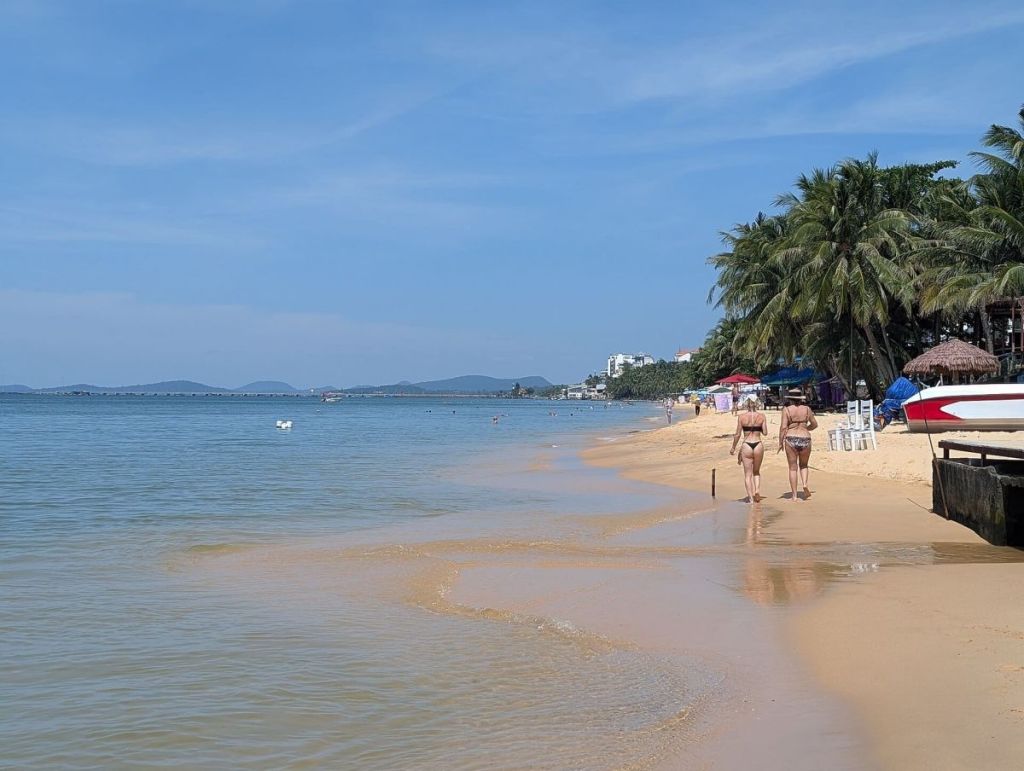
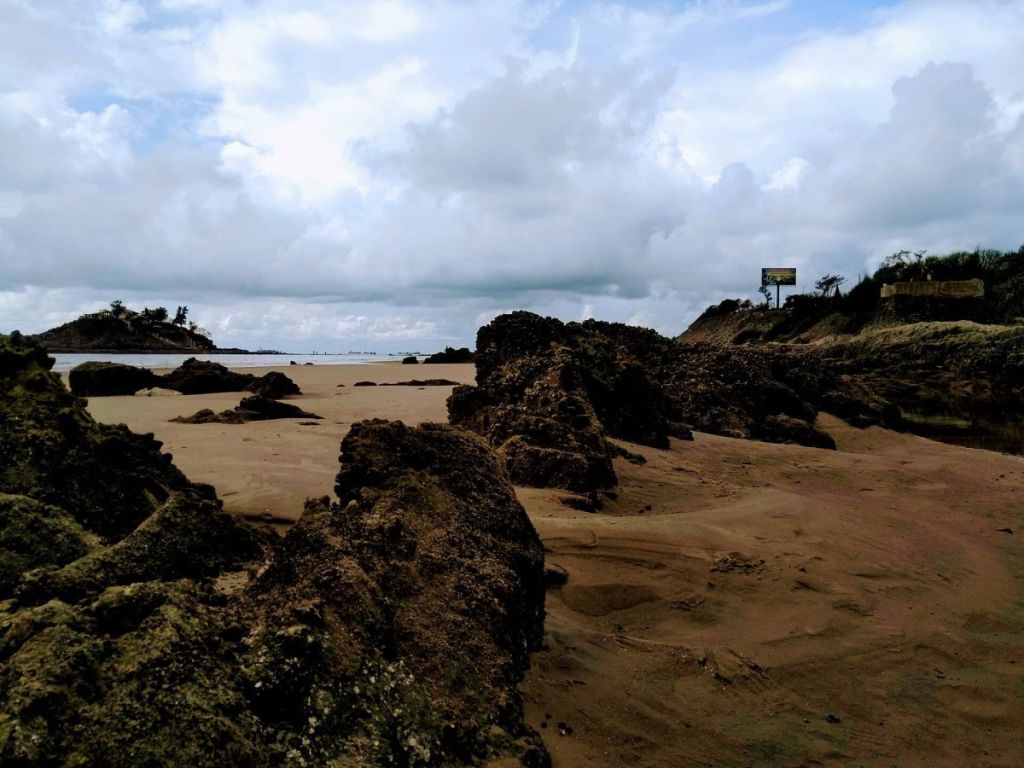
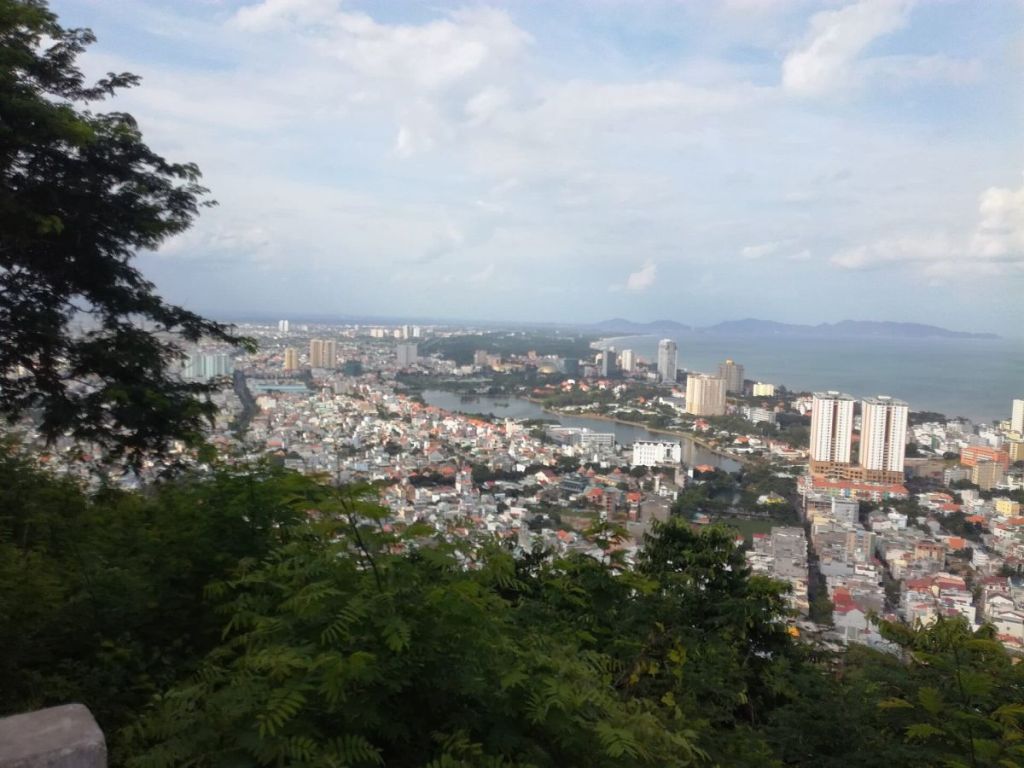
Yes: Vung Tau is the nearest beach city to Ho Chi Minh City, roughly two hours away by road or by fast boat, so it fits into a southern itinerary without a flight. Since July 1, 2025 it has been administratively part of Ho Chi Minh City, although on the ground it remains a separate seaside town on a peninsula.
Photos: 1) Willyvu, CC BY-SA 4.0; 2) Chris Phan from Eugene, Oregon, United States, CC BY-SA 2.0; 3) Damian Vo, CC BY-SA 2.0; via Wikimedia Commons.
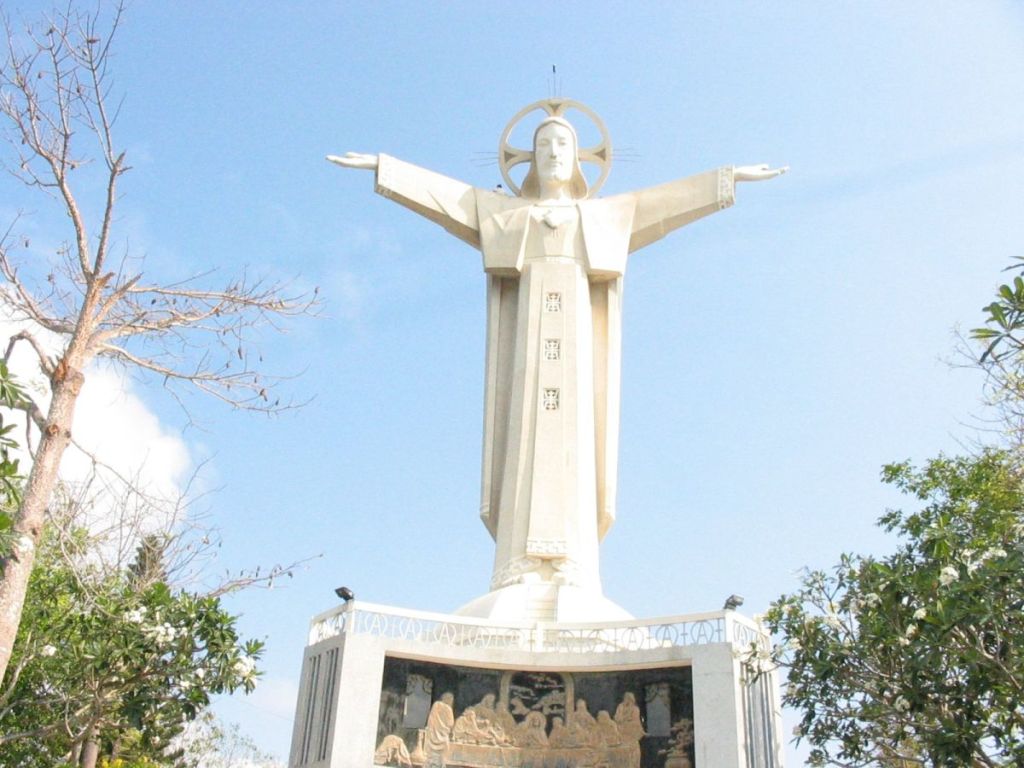
The city has two main shores. Back Beach (Bãi Sau) is the long, sandy swimming beach on the east side, lined with seafood restaurants and apartment towers. Front Beach (Bãi Trước) faces west toward the fishing fleet and is the place for sunset walks. Between them stand two hills with the Christ the King statue (Tượng Chúa Kitô Vua) and the old lighthouse (Hải đăng Vũng Tàu), both reached by short climbs.
The weather follows the southern pattern, with the driest and sunniest months from December to April. That makes Vung Tau a practical choice in exactly the months when the Central beaches are wet. Two or three nights are enough to swim, eat bánh khọt (small crispy rice cakes with shrimp, the town’s signature snack) and rest before a flight home or the next leg north.
Local tip: Saigon residents head to Vung Tau on Saturdays and public holidays, and Back Beach fills up quickly. Come from Sunday afternoon to Friday for quieter sand and easier restaurant tables.
Finish your Vietnam trip by the sea. Stay in a Vung Tau Pearl apartment near Back Beach (Bãi Sau) as your southern base, an easy beach break after Saigon, Cu Chi and the Mekong Delta.
Frequently Asked Questions
Which region of Vietnam is best for first-time visitors?
The best region for a first visit is the one in season on your dates. From December to April that is the South; from February to August the Central coast; in March to May and September to November the North. With two weeks, most first-timers see all three on a Hanoi-to-Ho Chi Minh City route with a stop in Hoi An.
Is North or South Vietnam better?
Neither is better overall; they suit different trips. The North has stronger scenery, with Ha Long Bay, Ninh Binh and the mountains, and a cool winter. The South is warm all year, easier to get around and closer to beaches. Choose the North for landscapes and trekking and the South for winter sun, river life and relaxed short breaks.
What is the best month to visit all three regions?
March and April are the most balanced months for a full north-to-south trip. Hanoi is mild at about 18–30°C, the Central coast is dry and warming up, and the South is still in its dry season, though hot. October and November are a second option if you accept rain around Hue and Hoi An (averages as of July 2026).
Is it too cold to visit Hanoi and Sapa in December?
No, but you need warm clothes. Hanoi averages about 14–20°C in December, which feels colder indoors because few buildings are heated. Sapa and Ha Giang are much colder, with days around 10–18°C and nights near 5°C or lower, plus frequent fog that can hide the views (as of July 2026).
When is typhoon season in Central Vietnam?
Typhoon risk on the Central coast peaks from September to November, and the rainy season lasts until December. October is the usual month for flooding in Hue and Hoi An. Storms do not arrive every week, but flights, trains and boat trips can be disrupted, so keep bookings flexible in these months.
How long is the flight from Hanoi to Ho Chi Minh City?
A direct flight from Hanoi to Ho Chi Minh City takes about 2 hours 5 minutes to 2 hours 10 minutes, as of November 2026. Hanoi to Da Nang and Da Nang to Ho Chi Minh City each take about 1 hour 20 to 1 hour 30 minutes. Several airlines fly these routes many times a day.
Is the train from Hanoi to Ho Chi Minh City worth it?
The full ride is worth it only for rail enthusiasts, because it takes roughly 33–35 hours on the faster trains as of June 2026. A better plan is one section: the overnight sleeper from Hanoi to Hue, or the 2.5-hour daytime run from Hue to Da Nang along the coast below the Hai Van Pass.
How much does the Vietnam e-visa cost?
The e-visa costs USD 25 for a single entry and USD 50 for multiple entries, as of November 2026. Both versions allow a stay of up to 90 days. Apply through the official government e-visa portal, allow three to five working days for processing, and print or save the approval before you fly.
Can I visit Vietnam without a visa?
Yes, if you hold a passport from an exempt country. As of November 2026, citizens of 25 countries, including the United Kingdom, Germany, France, Italy, Spain, Japan and South Korea, can stay 45 days visa-free. Americans, Canadians and Australians are not on this list and need an e-visa before arrival.
Is Hoi An still its own city after the 2025 mergers?
No. Since July 1, 2025 the former Quang Nam province has been merged into Da Nang city, so Hoi An Ancient Town and My Son Sanctuary are now administratively inside Da Nang. Nothing changes for visitors on the ground: the old town, its ticket system and the 45-minute drive from Da Nang airport are the same.
Which airport will my flight to Ho Chi Minh City use?
Most flights still use Tan Son Nhat (SGN), close to the city center. Long Thanh International Airport (LTH), about 40 km to the east, is scheduled to begin operations around December 2026, starting with some international flights. Check the airport code on each ticket, especially if you have a same-day domestic connection.
How far is Vung Tau from Ho Chi Minh City?
Vung Tau is roughly two hours from central Ho Chi Minh City, by expressway and road or by fast boat along the Saigon River and the coast. That makes it the closest beach city to Saigon and a simple two- or three-night add-on. Since July 2025 it has been part of Ho Chi Minh City administratively.
Sources
- Vietnam.travel: visa requirements, e-visa fees and visa-exempt countries
- The Man in Seat 61: Vietnam train timetables and fares
- Vietnam Airlines: Hanoi to Da Nang flight times and fares
- Hoi An Heritage: 2026 Ancient Town ticket announcement
- VietNamNet: Vietnam’s 34 merged provinces and cities
- Ha Long Bay: passenger port ticket prices from July 1, 2026

Bài viết liên quan

Renting a Motorbike in Vietnam: Licenses, Insurance and Safer Options
Can you rent a motorbike in Vietnam legally? Licence classes, which IDPs are valid, 2025...

Bảng Giá Căn Hộ TT Genesis Mới Nhất tháng 10/2026
Giá TT Genesis bao nhiêu? Cập nhật đến ngày 29/10/2026, dữ liệu tham khảo gần...

The Collectors’ Có Những Concept Nội Thất Nào?
The Collectors’ sở hữu sáu concept thiết kế, gồm năm concept đột phá là Galleria...

Bảo hành căn hộ TT Genesis trong bao lâu?
Căn hộ TT Genesis được bảo hành 60 tháng kể từ ngày nghiệm thu tòa...

Những Yếu Tố Quyết Định Thanh Khoản Đất Nền Dragon Eden
Thanh khoản đất nền Dragon Eden được hỗ trợ bởi năm yếu tố: Sổ riêng...

Hành Lang Thoát Hiểm Và Khoảng Lùi Sau Nhà Tại Dragon Eden
Tại Dragon Eden, chủ đầu tư đã chừa sẵn các lô đất trong mỗi dãy...

Tầng 20–21 Saigon Mia Có Bao Nhiêu Căn Và Thuộc Những Block Nào?
Tầng 20 và tầng 21 Saigon Mia đều thuộc phạm vi của cả ba block...

Hệ Thống Y Tế – Mua Sắm – Giải Trí Quanh TT Genesis
Hệ thống y tế – mua sắm – giải trí quanh TT Genesis là một...